

The Aurora’s motor is separated from the main plinth and housed in a substantial, circular chassis, the inner edge of which slips below the platter. The motor itself is a high-quality Swiss DC model, the same unit fed from the same regulated supply that OL use on all their ‘tables, right up to the flagship, twin-motor Voyager. Whilst I could hardly describe the motor’s end-plates and drum housing as elegant, it at least echoes the circular theme established by the plinth elements. The top plate carries a large rotary switch for 33/45 and off, with a small diameter pulley used to drive a flat peripheral belt around the outside of the platter. Both pulley and belt play a large part in the ‘table’s overall speed stability and dynamic response and here again, Origin Live claim the use of proprietary materials, selected after extensive auditioning. The belt is particularly noteworthy, with a rough, grippy surface completely unlike the smooth polymer or rubber belts used by other manufacturers. Once again, detailed instructions are provided on correct placement for the motor housing and the avoidance of unnecessary stretching of the belt.
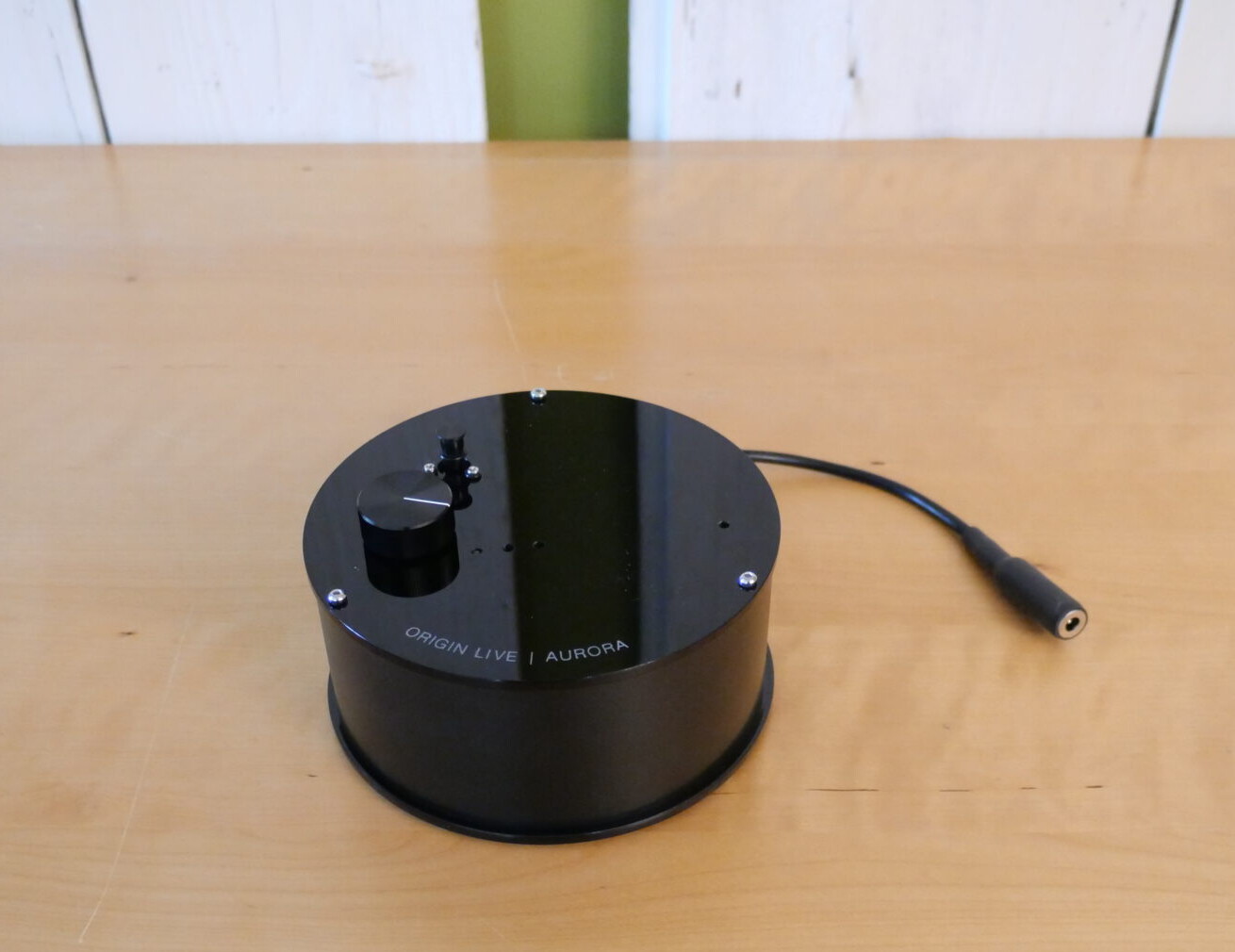
Two pin-holes allow access to trim pots to set platter speed (33 or 45), with OL suggesting that you run the deck for at least 48 hours before doing so, to allow for burn in of the power supply components and any initial belt stretching. They also suggest that you revisit the speed settings after a month, as well as providing some carefully considered advice as to how best to measure platter speed and the shortcomings of many popular approaches. If all a turntable has to do is “turn at 33 1/3rd RPM and do it quietly” then the mechanical design, materials selected and set-up advice provided all suggest that the Aurora should succeed admirably, where so many other record players fail so demonstrably.
Gaining confidence…
Although you can order the Aurora with an armboard to suit any number of different arms, I suspect that most buyers will opt for one of the nine arms that Origin Live offers. The assumption might be that their most affordable arm would be the natural partner. That would be the Onyx, at £530, a price that accords with conventional wisdom when it comes to the ‘table/tonearm cost ratio. OL suggests otherwise, specifying their Zephyr tonearm, two models higher in the range than the Onyx, at a price of £1,250. That still brings the complete player in at £3K plus cartridge – well inside my nominal £5K budget.
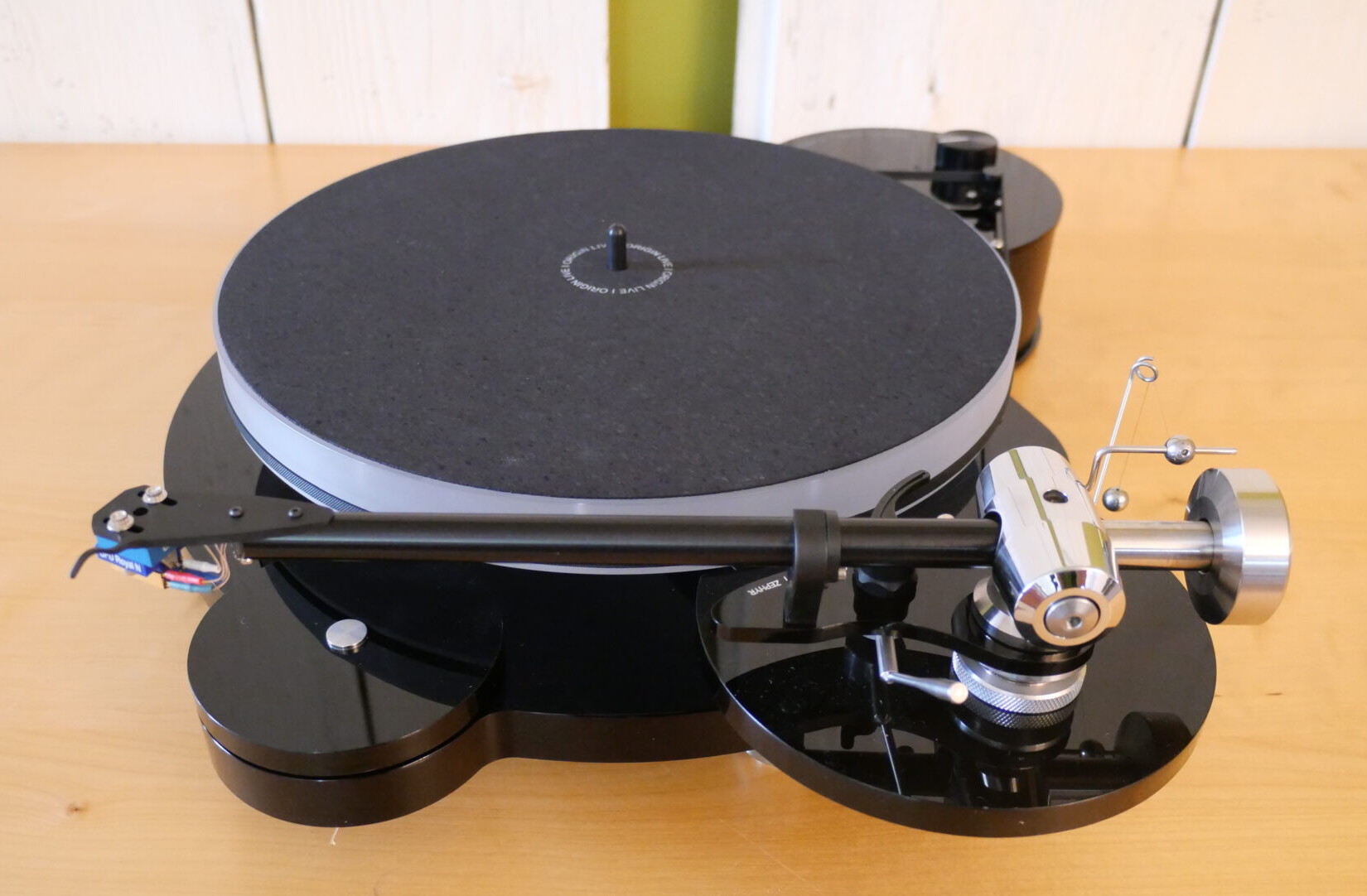
Sit the two arms side-by-side and there’s little to visually separate them, save the polished chrome bearing yoke and counterweight stub on the more expensive model. They share the same, broad shouldered bearing housing, simple tubular tonearm and screw-attached headshell. The cueing platform, cueing mechanism and falling-weight bias are all shared parts. Both arms use the same large-diameter threaded post/single-bolt, RB300-style mounting and a threaded collar for setting VTA. Both use the same, OL proprietary bearings., internal and external cabling. So, what justifies the difference in price?