

Compared to the distinctive proportions and unusual circuit topology of the 994, the 914 pre-amp might seem plain, minimalist vanilla. But despite the absence of visible features and controls, there’s a lot more to this elegantly styled unit than meets the eye. A symmetrically laid out, fully balanced circuit offers three balanced and three single-ended/RCA inputs, one balanced and one single-ended/RCA output. Lift the lid and you’ll discover three separate AC transformers, dedicated to high-tension, heaters and ancillary functions. Even more impressively, there are no fewer than four shunt-regulated power supplies. Considerable effort has gone into keeping this circuit quiet!
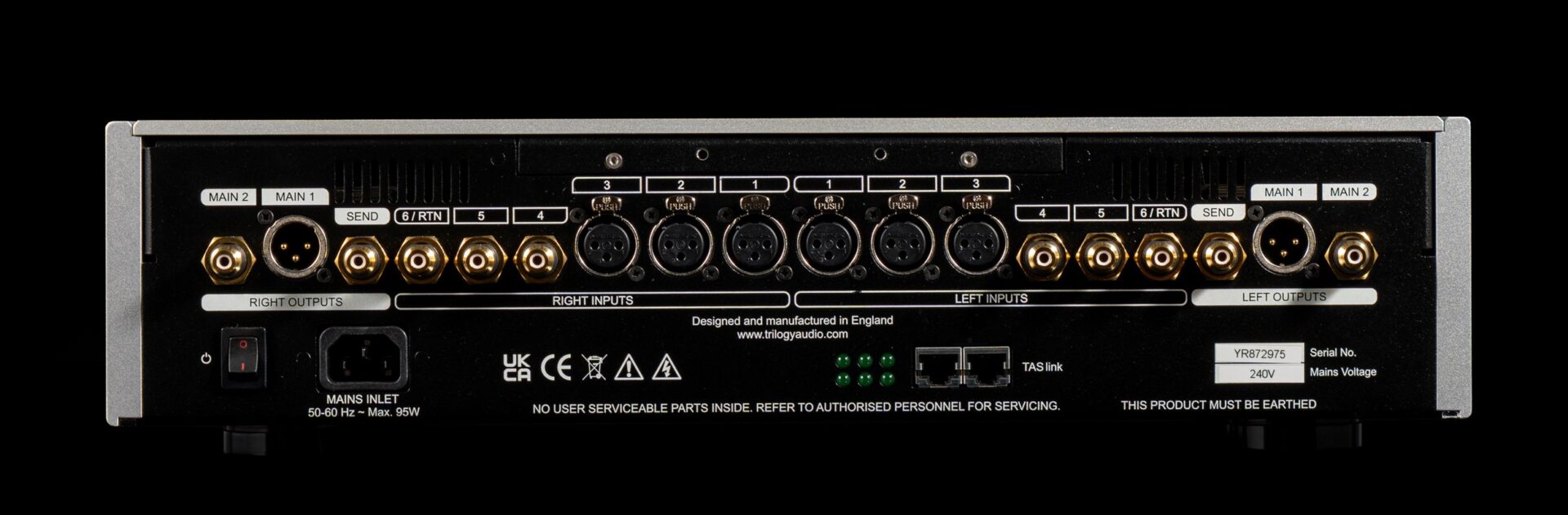
Like the (superb) Trilogy 921 integrated amplifier that was recently reviewed (https://gy8.eu/review/trilogy-audio-921-integrated-amp/) this is a software driven device that hides its multi-faceted functionality behind a couple of push buttons, a rotary control and an extensive set of surprisingly intuitive menus. These give you control over balance and display brightness, starting volume, input level, maximum output level, default input on switch-on, input naming, a theatre by-pass setting and adjustable IR coding (to avoid remote control clashes). There’s even a pin-code facility to ‘lock’ the unit in your absence. In addition, there’s a multi-function timer, with calendar and switch on/off capabilities, which might seem like overkill until you think about its use in conjunction with the ecoA setting. Leave a disc playing on repeat in your CD player, or shuffle on your streamer; set the default input to match and the timer to switch on the pre-amp on Friday morning and, by the time you get home Friday evening, your pre-amp AND amps will be all the way toasty warm and waiting to play. You can even set them to switch back to ‘wait’ mode on Sunday evening. The 914 is that rarest of animals, a hair-shirt, high-end, audiophile orientated product that still provides astonishing levels of convenience and user configurability. In that regard it echoes the CH Precision L1/L10, units that still set the standard when it comes to combining ultimate performance with convenience. That’s good company to be keeping.
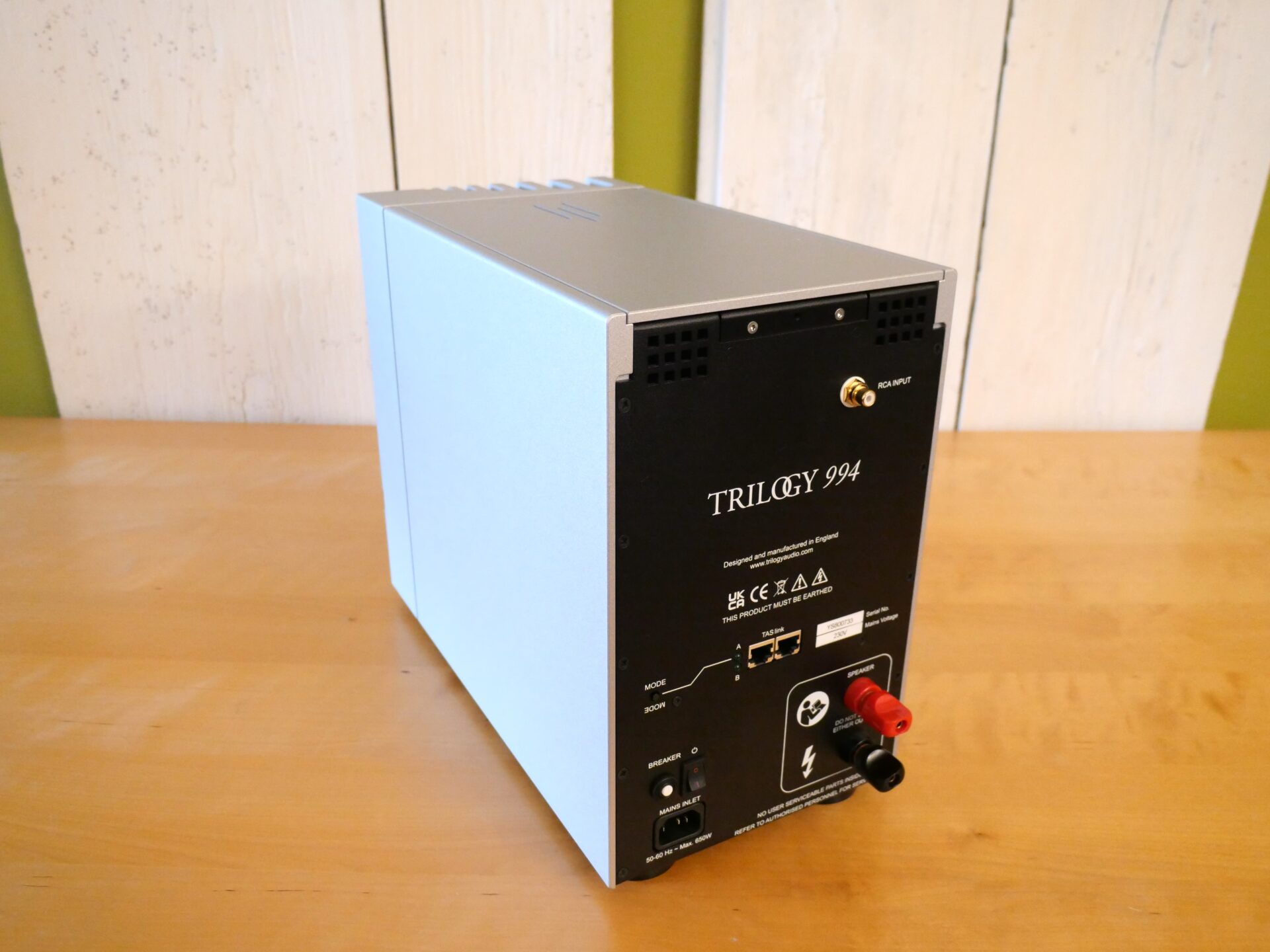
Look at a rear shot of the 994 amps and you’ll notice that they offer a single RCA input. So, despite the balanced circuitry and outputs of the 914, you’ll be hooking up this pairing with single-ended rather than balanced cables. Is that an issue? Not unless you want to site the amps next to your speakers and run REALLY long interconnects. The balanced inputs on the pre-amp and the balanced topology will still offer advantages in terms of noise rejection where it most matters – but don’t simply assume that balanced is best. Single-ended connection has a musical appeal all of its own, attributes that dovetail perfectly with the sound of this amplifier combination.
The notion of taking the best-of-both from solid-state and tube designs rather depends on what you think each topology does best. Talk tube sound with many an audiophile and the terms warm, round and expansive will crop up sooner rather than later. Just as the terms, dynamics, bass definition and power will be prominent in any discussion of solid-state. But I don’t agree with that conventional wisdom. For me, the real strength of tube circuits rests with their voltage gain characteristics and their ability to track dynamic signals. For solid-state I look at load-tolerance and the absence of an output transformer. Tubes can put meat on the bones, but if you want to feel the power and texture of that muscle, you’ll find it more easily through good solid-state design. Those are broad-brush generalisations and the really great amplifiers are the outliers that overcome those limitations, tube or solid-state: but those outliers are inevitably expensive. Which is exactly where the 914/944 combination comes in.
Time to get back to where we came in…
The qualities that bring Steve Earle and Guitar Town to life are not limited to new-country or pop and rock music. The easy grasp of rhythm and the ability to track changes in pace and keep things moving, the way these amps embrace changes in level and musical density are just as important for classical recordings or jazz.
