

The arrival of the CH Precision P1.5, with its Philips curve for record replay, has opened up access to a whole range of stellar artists and their recordings, amongst them Henryk Szeryng. Play his 1966 performance of Mozart Violin Concertos 5 and 6 (with Gibson and the NPO, Philips 6882 006/802 709 LY) and the first thing to notice is just how obvious the Trilogy amps make the superior temporal reproduction of the Philips curve. Yes, the sound is sweeter and less bright, but it’s the top-to-bottom balance, the expressive playing of the soloist and the superb ensemble accompaniment that make the difference, the performers and performance falling into place. The amps capture Syeryng’s graceful technique and agility, his unforced modulation and phrasing. Switch to Martzy and her Kreutzer recording (on Coup d’Archet, COUP 003) and you’ll marvel at the sheer intimacy between soloist and pianist, the relationship that makes this performance so special. This is a conversation of equals, an exchange that ebbs and flows, hesitates and takes flight. It’s a temporal and dynamic obstacle course that the Trilogies take in their stride, without blinking or missing a step, putting the focus firmly on the playing, the performance and, above all, the music.
Solid senders…
These smaller scale works clearly illustrate how the Trilogy amps get the right pieces in the right place, a sense of pattern and organisation which helps explain the coherent, focused energy that they project. Move up in scale and that sense of musical purpose and substance really comes to the fore. While Neeme Jarvi’s Sibelius cycle on BIS has long been admired for its artistic vision and overall interpretation, they’ve always been looked down on by audiophiles and collectors, partly for their early digital recordings, partly for the DMM pressings. It’s a combination that can sound detailed but disjointed and thin, which is ironic given Jarvi’s fluid and sinuously muscular readings. Well worth a listen, they are a stern test of your amplifier’s quality, a test the Trilogies pass with such ease and grace you forget that it’s a test at all. The 5th Symphony was recorded in October 1982 and the sound can be everything that audiophile prejudice would suggest. But the Trilogy amps effortlessly reveal the undulating flow and smooth continuity of Jarvi’s direction, the First Movement unfurling as a single fabric, woven from strings, brass and woodwinds, the bass foundations beautifully placed and weighted, the timp rolls rumbling convincingly. These amps allow the music to swell with conviction, gaining volume and bringing substance and presence to the increasing density, emphasis and purpose to the performance, yet without the soundstage collapsing or piling forward.
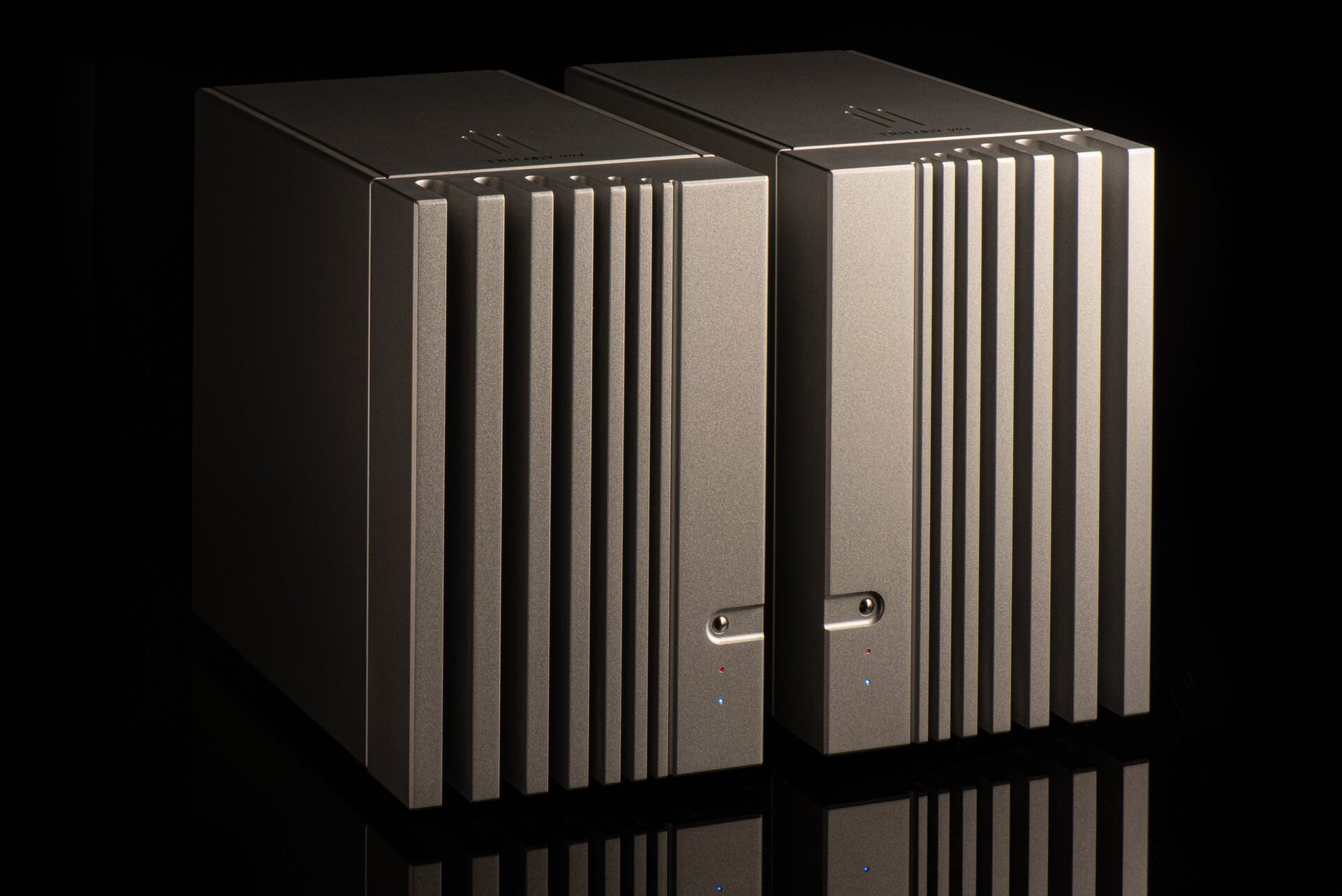
Even more impressive, especially given the source material, there’s almost no hardness or glare. You’ve got to push really hard before you outrun the 994s’ comfort zone, despite the modest Class A power rating. It’s a quality that carries through the symphony, scaling the heights of the Fourth Movement and delivering those final musical exclamation marks with an emphatic confidence and willingness to wait. There’s nothing hurried or forced here, just a natural sense of pace, momentum on demand, restraint when required. Rhythmic integrity, musical substance, body and presence: This is exactly the combination of musical virtues that lead to long-term listening pleasure, what used to be termed “musicality’, before that term became debased through association with the syrupy warmth of underpowered triode amps.
