

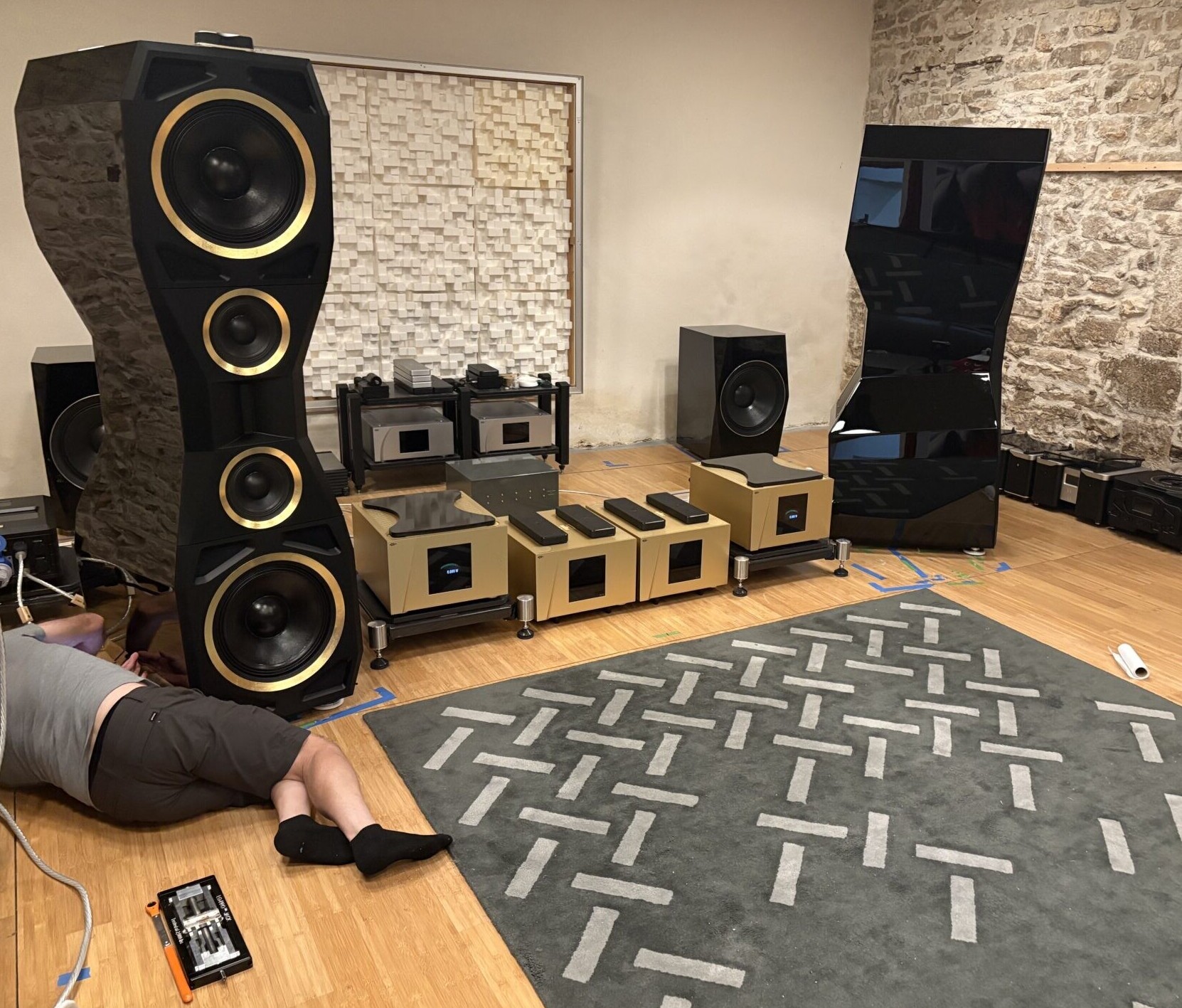
There’s more than one way to skin this particular cat and preferred approaches are just that. You should try the various approaches and uses those elements of each that work for you. But there are two other important caveats to appreciate. The first is that no approach is universally successful. Always be prepared to back away and try a different methodology if your usual technique isn’t delivering the results. Approaches to set up are like tools in a box: some you use almost all of the time, but occasionally, you come across a ‘job’ where only a specific tool will do. The second caveat concerns overall direction. As I’ve already stated, the departure points for ST’s process and my own are quite different. But, I’m perfectly happy to let him follow his path rather than suggesting or imposing my own. There may not be a single ‘right’ way to position speakers, but you can only go one way at a time. That means having one person (and one person only) directing operations. If too many cooks are a disaster in a kitchen, too many opinions are catastrophic when it comes to speaker set-up. That doesn’t mean rejecting or ignoring musical reactions: it means that only one person can direct the adjustments or changes that they elicit. There’s a difference between the performance achieved and how it’s arrived at: the first should be a response to the listener’s musical goals and preferences; the second lies in the adjustments made to the speakers’ positioning, attitude and relationship to the room and each other – and those are purely mechanical in nature.
So, in this instance, the mechanical process is entirely directed by Stirling. He is responsible for first establishing certain technical and objective aspects of performance. But once those are in place, the fine-tuning or ‘voicing’ of the system depends on the owner/ preferences – which is where I get to listen and feedback my musical impressions. The often, tiny adjustments that bring out certain aspects of performance, balancing musical virtues (and minimizing vices) are once again, down to Stirling. Especially with a speaker of this size and significant weight, I can offer assistance in the shape of an extra pair of hands. Having worked together so often and having observed the steps taken so far, I can even suggest those steps that might lead in the right direction – but the ultimate decision is always down to the person responsible for the mechanical aspects of the speaker’s attitude and alignment and in this instance, that’s Stirling. The better the feedback I can provide, the easier his task and the better the final results. Fortunately, we’ve worked together often enough to share a common musical and sonic vocabulary, making the process easier and, in this case, the results spectacular. Mind you, as I suggested earlier, the speakers were an immediately comfortable ‘fit’ in the room. Sometimes you find yourself fighting the acoustic space in search of performance. In this case, it was more like helping the speakers on their way…