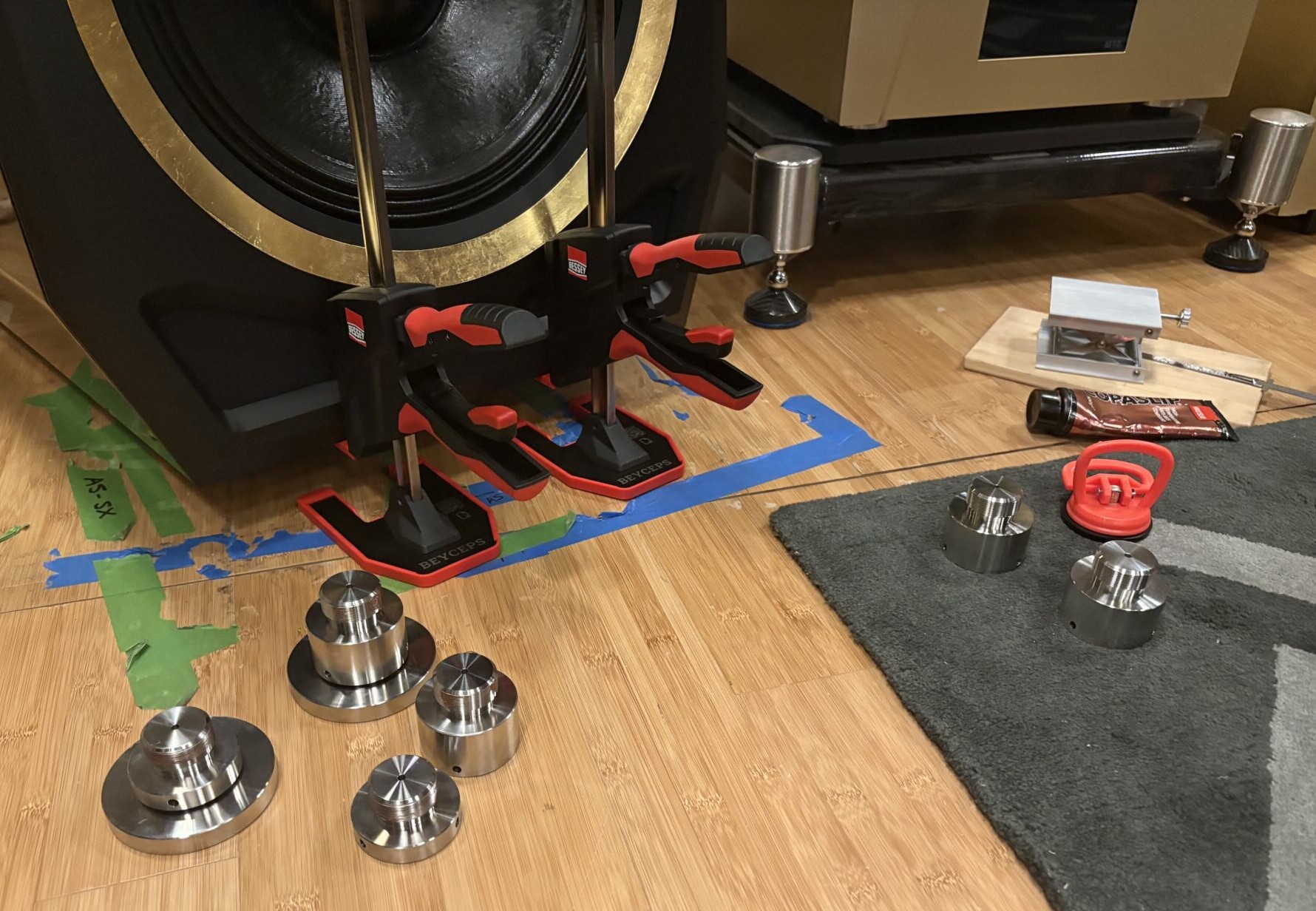

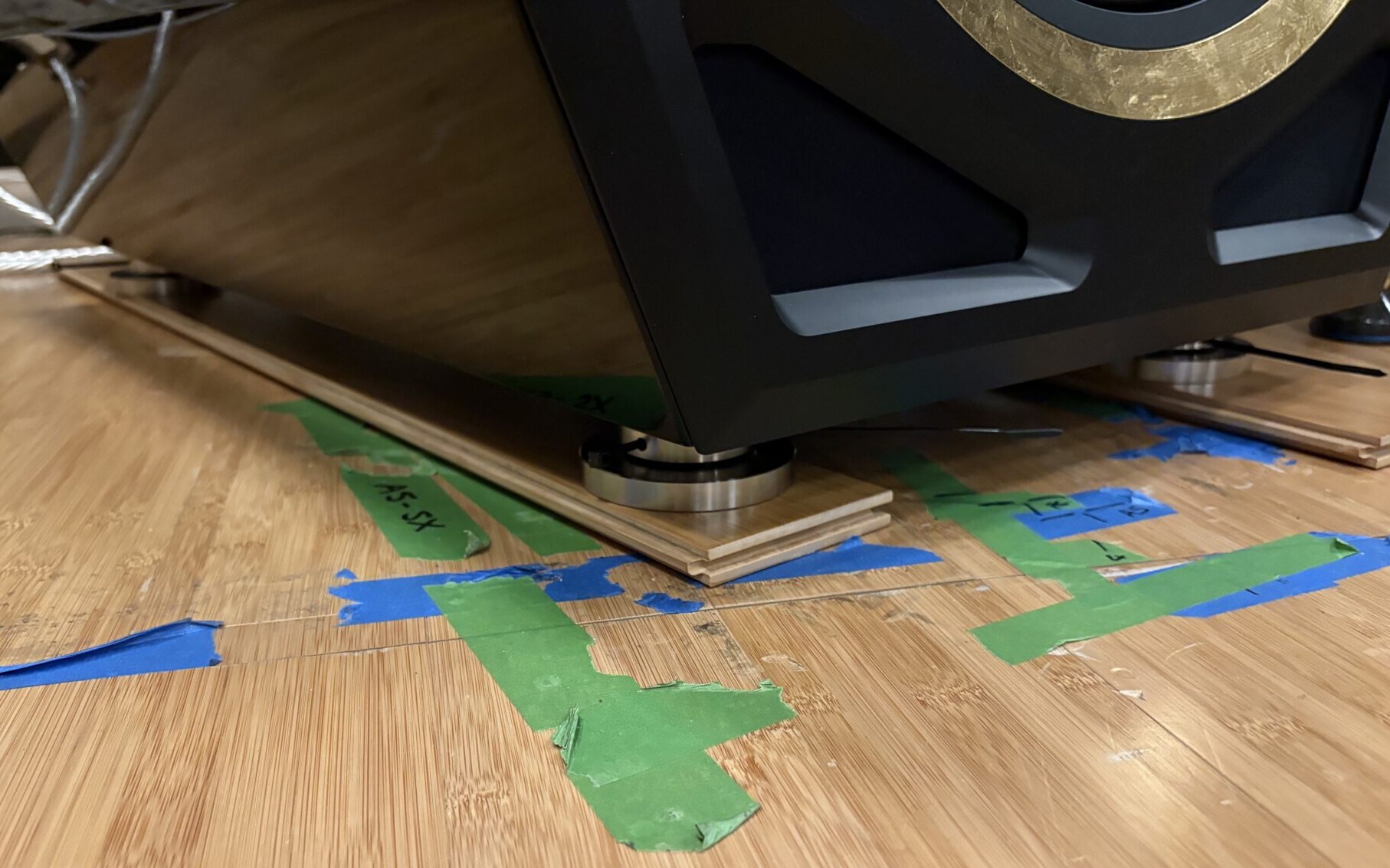
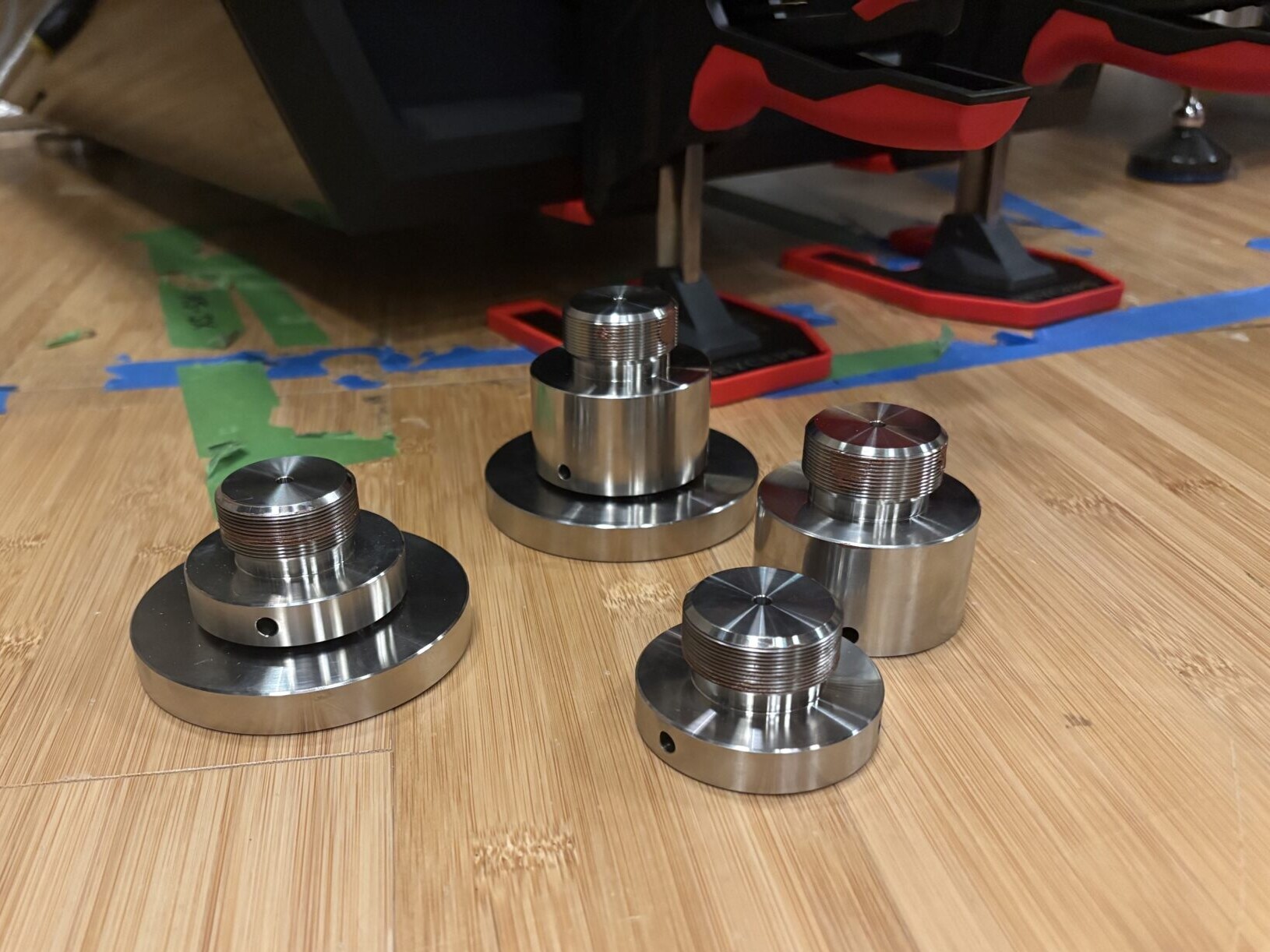
With the benefit of hindsight, the first thing I’d do on dropping the bottom off of the flight-case, is remove the 12mm feet and replace them with the 32mm version, making sure to CopaSlip the threads (to ease adjustment) and replace the zip-ties that are pushed through the pry-bar holes. These stop the feet dropping off as you tilt the speaker vertically. Doing this with the speaker horizontal is downright simple. Replacing the feet or greasing the threads with the speaker stood upright is a real challenge, awkward and demanding special tools. The 32mm upstands might not be the answer in every case, but they make a far more sensible starting point, allowing you to drop the speaker or raise it, as required.
Final (extremely fine) adjustment of the speaker’s height was aided by the use of the Bessey Beyceps hand-jacks, shown in the photos. Although outwardly similar to other – often far cheaper – alternatives, these are the real deal, capable of lifting really heavy loads in a precise and controlled manner. A pair of the Bessey jacks is capable of lifting (and just as importantly, lowering) the Monarque speakers, even when those speakers are stood on their lowest feet. In contrast, the ‘industry standard’ Wilson jack won’t fit under the Göbel speakers on all but their tallest feet. A single Bessey unit will un-weight the feet for adjustment and should be considered an essential accessory for fine-tuning the azimuth and rake-angle of the speakers – the next step in this process.
Having solved the lumpy, discontinuities and muddle in the deep bass (on the left-hand speaker), the next step was to ‘zero it out’, getting it as level/vertical as possible in both axes. Even using a digital scale, measuring to three decimal places, this is still an approximate rather than absolute process. The panels and construction of this (or any other speaker) are not flat enough or accurately assembled enough to provide a true level. But that’s not the point. The digital level offers a reference around which the attitude of the speaker can be adjusted by ear, consistently and repeatably. To aid that consistency, it’s important to mark the position of the level(s) and leave it in situ during operations, as shifting its position will introduce a meaningful error. Stirling used a combination of Digipass Bluetooth levels (whose readout on a phone allows you to place the level on top of a tall speaker, while gauging the result of adjustments made at the base) and the Level Developments bi-axis level.