

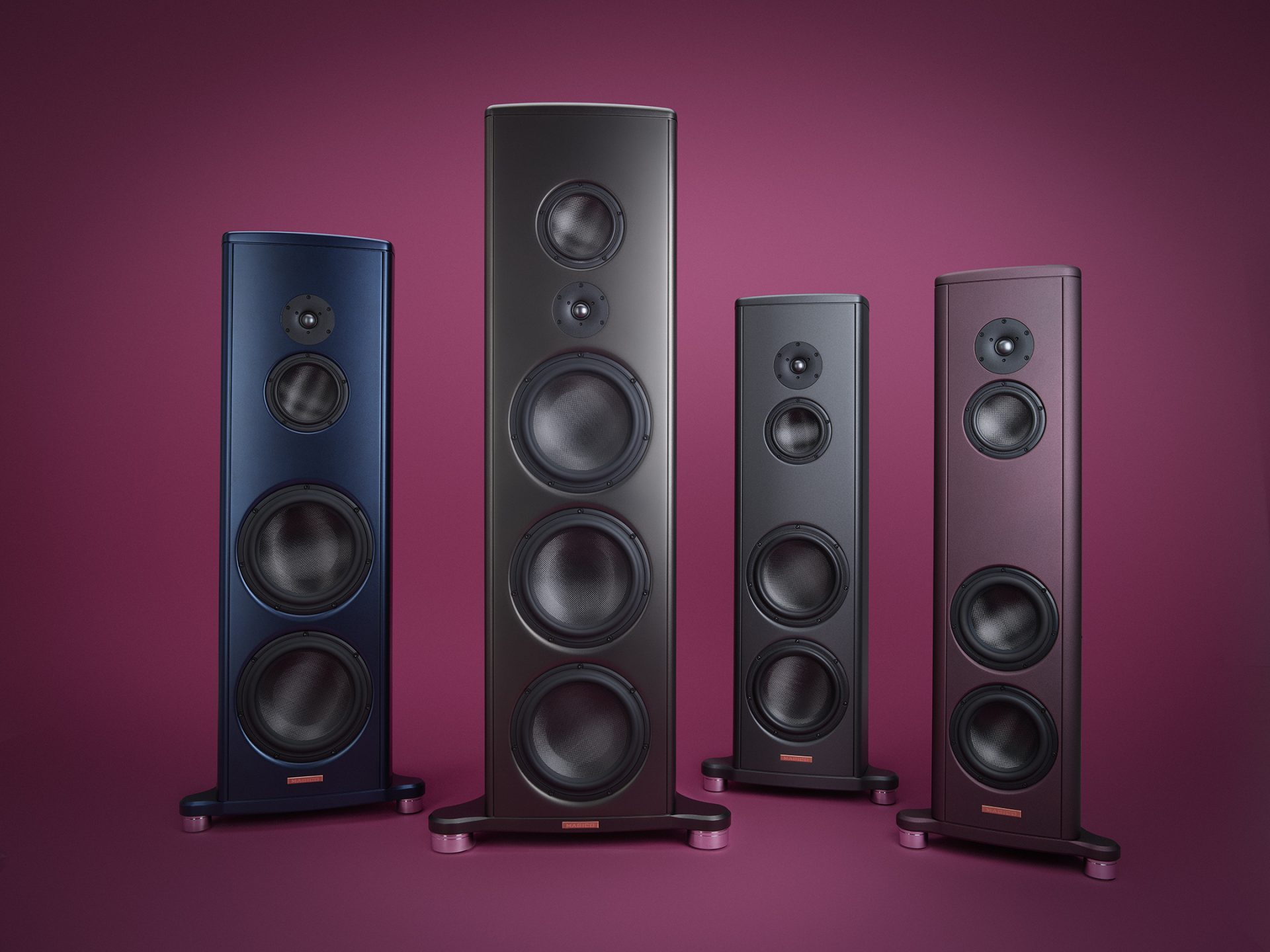
If I had to sum up the S7’s sound in a single word, that word would be presence. There’s a sense of scale, weight and substance to music and performers here that only comes from genuinely full-bandwidth loudspeakers. But it’s not enough to simply reproduce that bandwidth: the system and in particular the speakers, have to make sense of that energy and information. Otherwise, it just constitutes spurious noise and gets in the way of the music. Look at the numbers for the S5 2024 and the new S7 and you’ll see specs that are almost identical: Magico claims the same 20Hz to 50kHz bandwidth and 88dB sensitivity for both speakers. Both speakers use the same drivers. Yet the S7 packs an extra 10” bass unit, 7” of height, 4” of depth and 120lbs of material into a cabinet that’s nominally the same width. Given the thin-wall nature of the cabinet enclosure, that’s a big increase in internal volume as well as swept area – and that translates directly into the substantial and beautifully controlled low-frequency underpinnings that support the S7s’ sense of scale and space, physical presence and musical substance. It’s quite an achievement. Bigger boxes generate significant physical and mechanical challenges, often generating more problems than they solve. I don’t have details of the S7’s internal structure, but look at the S5 page on the Magico web-site https://www.magicoaudio.com/s-series-s5 and you’ll see an exploded view of that speaker, a view that helps illustrate the lengths that the company goes to, in terms of complex engineering, internal bracing and damping of the cabinet, in order to achieve those clean, clear low frequencies. Guy Boselli described the speaker as “silent” and it’s all that. It’s silent in the sense that you neither hear nor are aware of any contribution to the sound from the cabinet or drivers. It’s silent in the sense that the musical performance exists, utterly independent of the speakers or system actually producing it.
And this is bass that’s not just clean and clear, it’s informative too. Play ‘Moanin’’ (from Art Blakey and the Jazz Messengers, Blue Note 4003/UHQ-MQACD UCCU-40120) and Jymie Merritt’s bass, so often softened and indistinct by even big systems, is clearcut, pace and pitch perfect. His lines lock-step with Blakey and Bobby Timmons on piano, his solo, so often muddled and clumsy, is shaped, articulate and purposeful. The S7s deliver perfect separation of Víkingur Ólafsson’s left and right hands in La Demoiselle élue, (Debussy-Rameau, DGG 483 7701) with space between notes, yet impetus and attack when required, a beautifully measured performance that offers a dramatic contrast to the dexterity, speed, precision and articulation of Rameau’s Le Rappel des oiseaux that follows it.
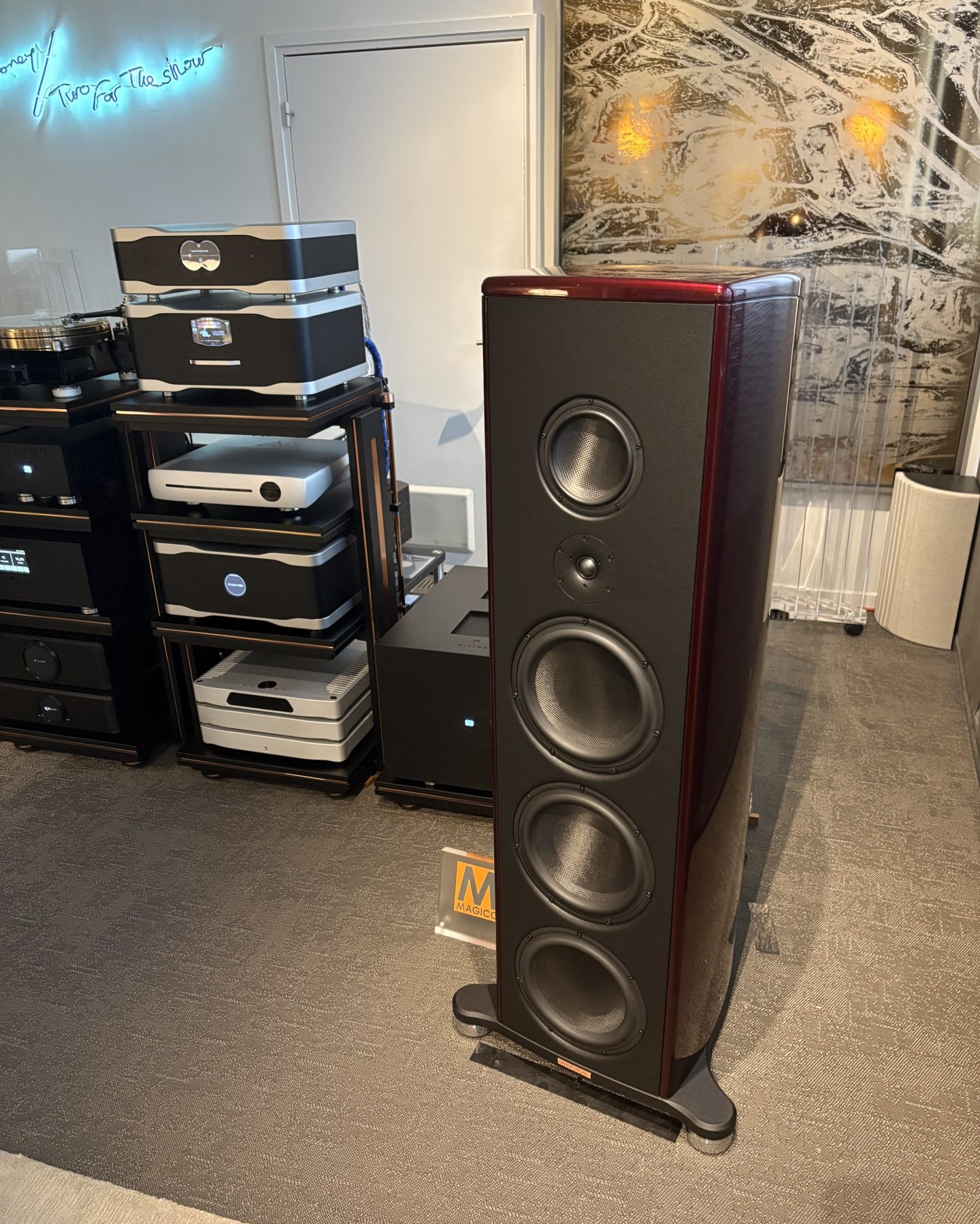
The ordered, musical clarity of the S7s’ presentation grows out of the transparency and linearity of its bass. In years gone by, Womack&Womack’s ‘Teardrops’ (Conscience, Island 259 139) is the sort of deeply funky track that would have had Magico speakers sounding the way middle-aged, OWG celebrities look, trying to perform the salsa on Strictly. The S7s didn’t so much as blink, placing Linda Womack’s fabulously emotive vocal solidly front and centre, propelled and supported by the complex but beautifully layering arrangement of the band. It’s a great song and a great recording, even if its bottom end is ultimately curtailed by the radio ready mix. But rather than sounding thin or insubstantial, the Magicos revel in the sheer quality of the playing and the legendary Compass Point sound. The backing vocals are effortlessly separated, the bouncy energy of the bass line full of life and vitality. This easy, rhythmic articulation, dynamic integrity and temporal coherence are so naturally integrated into the musical whole that they pass unnoticed – at least as separate qualities or characteristics. Each is a natural extension of the others. Maybe white guys still can’t jump (the good ones just score three pointers instead) but the S7s can certainly dance.