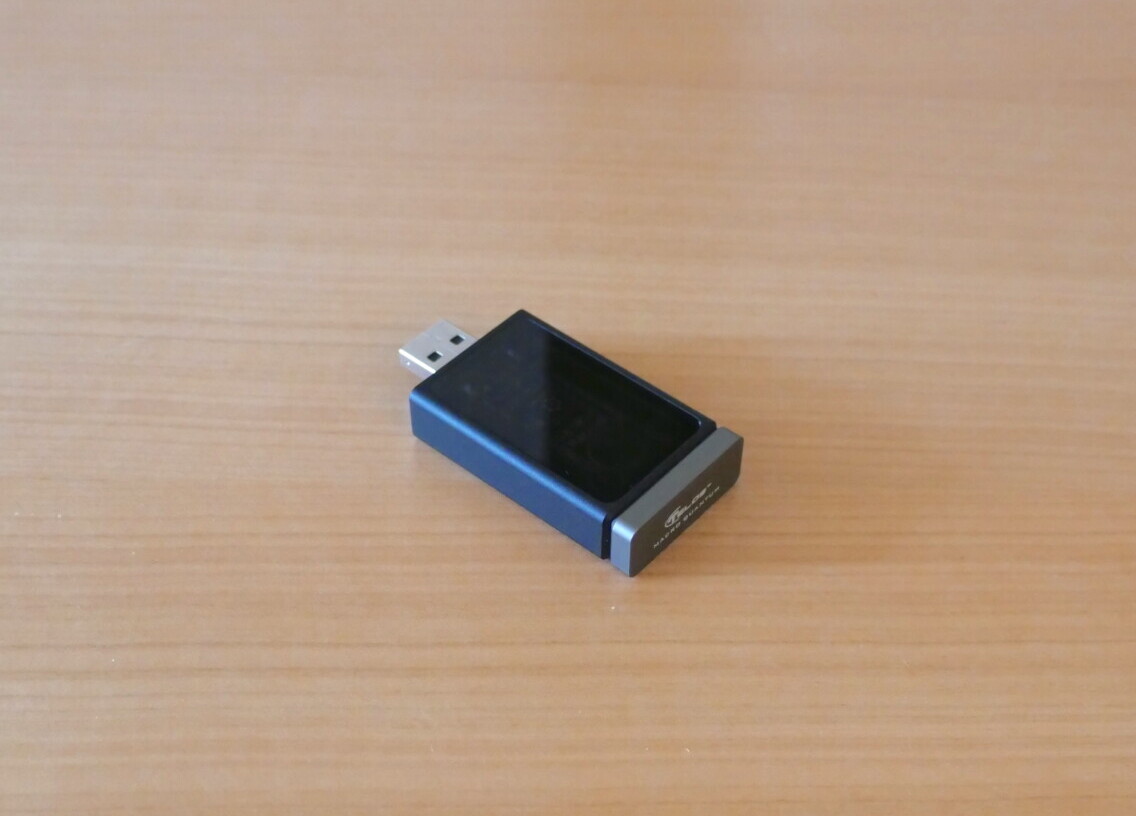
The Macro Q is a USB dongle-type device, similar to the CAD USB Control. Like the other Telos products, it is both solidly and substantially built, even down to its own, anodised and engraved end-panel, very much a mini-GNR. Its complex internals are even visible through the darkened acrylic insert on one face. It’s roughly of a size and somewhat cheaper than the CAD unit and is used in exactly the same way, its USB-A nose being inserted into any spare USB-A socket (input, output or update port). Used in the firmware update port of the CH Precision C1.2 or L1, it works like the USB Control too, having a similar impact on the presentation, cleaning up the soundstage and focussing the instruments, bringing an added sense of presence and immediacy. Likewise, used with digital components, the Telos adds resolution detail and transparency. Used in analogue components it leans more towards body, presence and dimensionality. The two pieces don’t sound identical: the Telos always offers more separation, resolution and transparency, the CAD a little more warmth and instrumental shape and body – differences that seem consistent across different systems and situations. But this is very much a case of different flavours rather than different things. If and when choices exist (not all products are equally available in all markets) I suspect it will come down to personal taste and system balance. What’s nice is to have a genuine alternative in dealing with the very real sonic and musical pollution generated through ‘open-ended’ USB ports.
But the unit that’s really interesting is the Macro G, a larger and far more ambitious design, targeted on ethernet networks. 13.5 x 5.5 x 3cm (a little over 5” x 2” x 1”) it consists of a solid and surprisingly heavy, beautifully machined aluminium chassis, with another of the trade-mark Telos anodised and engraved end-plates – in this case sporting a pair of ethernet sockets. But don’t let the two sockets and your assumptions confuse you. Look at the other end of the chassis and you’ll see a figure-8 AC input. Yup, not only is the Macro G an active device, it’s not an inline filter of the sort offered by CAD, Aardvark and Chord. The two sockets are both inputs – allowing connection to a spare ethernet port on both a router and a switch. To that end, Telos also supply a pair of basic CAT 8 patch cords, marked for directionality (a big thing in the Telos multi-verse). The whole package, along with the necessary power cord, arrives in a very neat, almost Apple-esque box, that only adds to the small but beautifully formed impression.
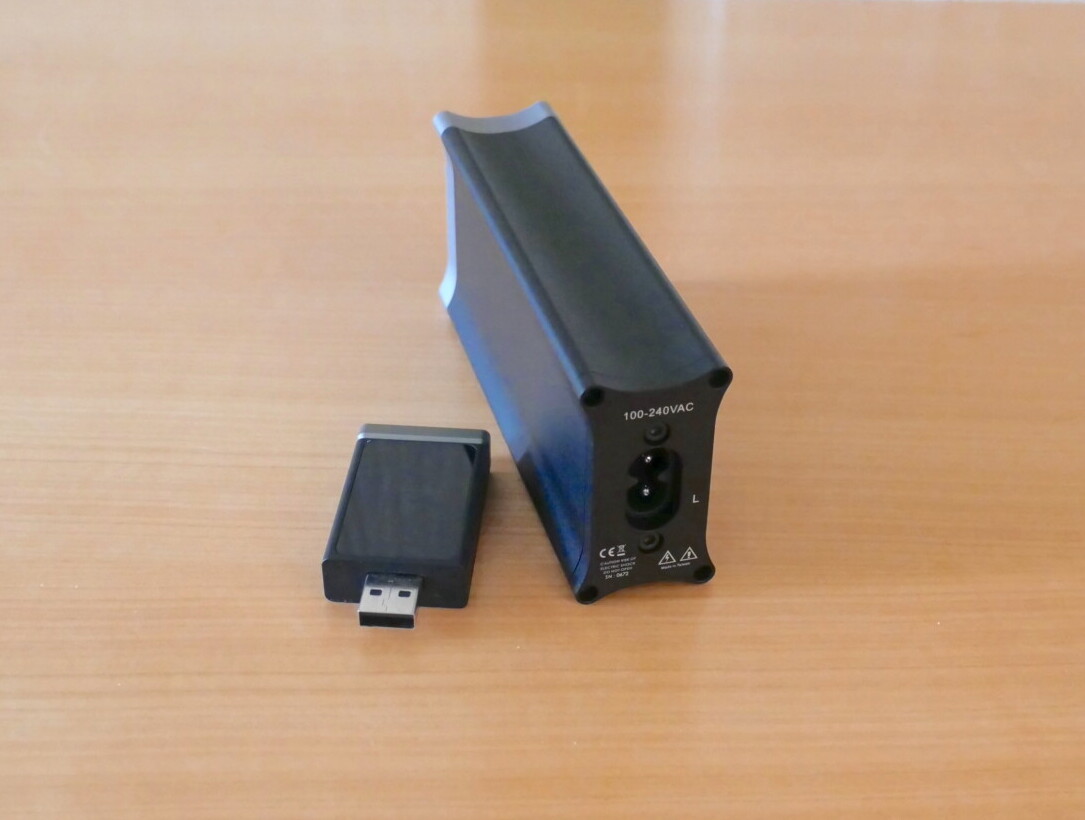
Inserting the Macro G into your audio dedicated network is simplicity itself – assuming that your router and switch have spare ports and are close enough together to run the cables. In the main Music Room system, neither is the case. The incoming router is around 5m from the switch located next to the server(s), while the Reiki Super switch makes a positive point of eliminating spare sockets, so a bit of rearrangement was necessary. The network uses a Reiki Switch adjacent to the router too, so the easiest thing was to replace that with a SOtM sNH-10G, along with its linear power supply. A step back in network quality, it allowed me to assess the benefits of the Telos Macro G as the manufacturer intended – benefits that proved to be startlingly worthwhile.