

The musical energy, projection and density so apparent with the Basie Big Band is just as evident and just as important on orchestral discs. Play Barbirolli’s recording of Finlandia (with the Hallé, on EMI ASD 2272) and as impressively paced and organized as the P1 is, the P1.5 invests the performance with greater presence, substance, impact and momentum. The full orchestral tuttis, backed with thunderously rolling timps are reproduced without any sense of gating or compression, dynamic limitation or strain. I’m sure it’s there, but short of direct, side-by-side comparison with the P10, I don’t think you are going to hear it – and maybe not even then. The P1.5 makes the P1 sound small and a bit insubstantial, without that vibrant sense of space and presence that the newer unit brings to recordings, loud or quiet.
This sense of purpose and concentrated energy also heightens the character and expressive qualities in a recording, making the differences between different performances more obvious and more telling. Compare the Karelia Suite on the Barbirolli disc to the same work conducted by Lorin Maazel with the Vienna Philharmonic (on Decca SXL 6084) and the differences couldn’t be starker, Barbirolli’s reading full of angular tension and dynamic shading, Maazel’s more smoothly sumptuous and comfortably upholstered. Where Barbirolli’s Ballade is sparse and haunting, Maazel’s is almost sentimentally elegiac in tone. Just as the P1.5 separates different readings, so it reveals shifts in musical mood. The three movements in Karelia are certainly distinct, one from another and Barbirolli’s direction brings out those differences with the first movement full of pace and intent, the second desolate, the third almost jaunty. The P1.5 doesn’t just highlight those distinctions, it makes sense of them, creating a connected whole out of the oddly shaped parts. This sure-footed musical literacy and articulation moves the 1.5 onto a completely different communicative plane to the P1. It speaks ‘music’ with a clarity that is at once unforced and unfettered, allowing the purpose, intent and energy in the performance to emerge, revealing its full expressive and musical range.
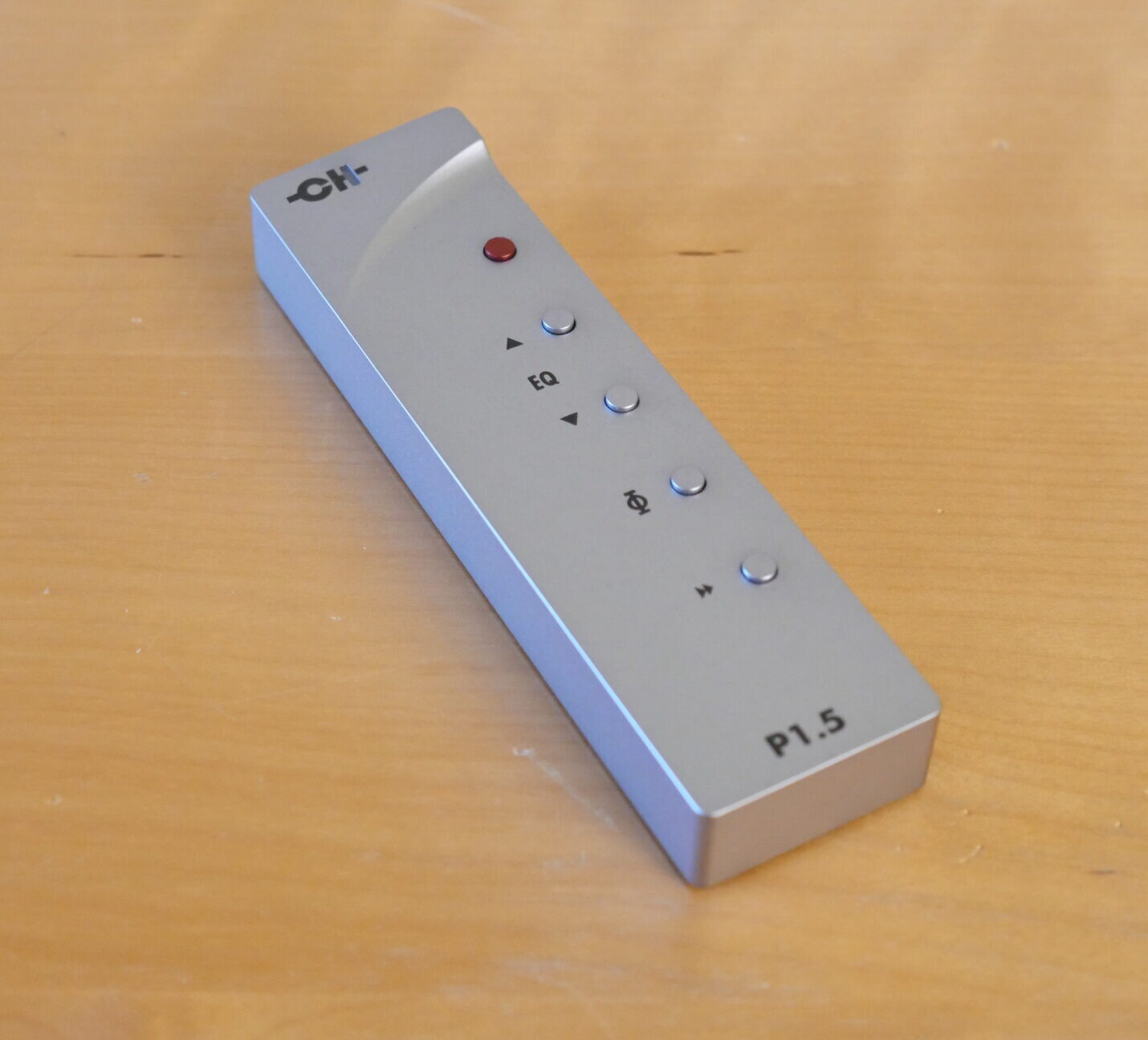
Talk Beethoven Violin Concerto discs and Arthur Grumiaux’s recording with Colin Davis and the Concertgebouw (Philips 6500 775) is unlikely to be top of mind. But maybe it should be. Not only is the orchestral direction precisely measured and balanced, but Grumiaux’s technique and performance is effortlessly expressive. The acoustic is well developed, the stage well-defined and depth and instrumental location are both first rate. The soloist stands forward of the orchestra, in a slightly spot-lit presentation, but that’s not unusual with violin recordings. What is unusual is the fluidity of the playing, the natural nuances of bow pressure and angle, the utterly natural sense of space and time. Which raises the whole issue of replay EQ…
Not all records are created equal – or equalised the same…
The choice of those last three examples is far from coincidental, drawn as they are from the EMI, Decca and Philips catalogues, all labels that continued to use their own, preferred EQ when cutting discs, long after the supposed switch to the RIAA standard in 1958. In fact, while RIAA adoption was reasonably swift in the US, it was slow or non-existent in Europe. DGG continued to use the Teldec curve for all LP production until they switched over entirely to CD in the early ‘90s. While that helps explain the reluctance of US commentators to recognize this reality, ignoring its importance also ignores the fact that in the ‘60s and 70’s, the major classical labels were European-based. Of the US labels, only RCA could really compete, but even their roster of artists lacked the sheer depth and quality available from EMI/HMV, Deutsche Grammaphon, Decca and Philips. The three example recordings cited above date from 1964 (the Maazel), 1966 (the Barbirolli) and 1974 (the Grumiaux) yet all three don’t just benefit from access to correct replay EQ, they are musically transformed by it.
