

There are those that dismiss different EQs as nothing more than tone controls, but that fundamentally misunderstands the nature of the EQ curves and the variations in them. The different poles employed by different curves alter the timing and distribution of musical energy within the recording, altering the relationship between instruments, undermining rhythmic integrity and expression, collapsing the coherent sense of air and space. Switch from RIAA to the correct EQ on any of these records and the performance, the stereo picture and the sense of musical coherence literally lock in. It’s like switching from a bored, amateur orchestra to the LPO – and the LPO on a very good day. It’s not a small difference. It’s not hard to demonstrate and, although it’s not as widespread a problem with rock and pop recordings, you’ll still be amazed how many of those benefit from non-RIAA replay. Which is really the point. There are no hard and fast rules here. RCA Living Stereo discs (with SB pre-fixs) were pressed in the UK by Decca – and generally sound best (better in many ways than their US counterparts) – played with a Decca EQ curve. Columbia pressings are a minefield and often respond to the EMI EQ curve. DGG records universally used Teldec EQ (into the ‘80s!) – except for a couple of titles recorded in Boston, which are RIAA.
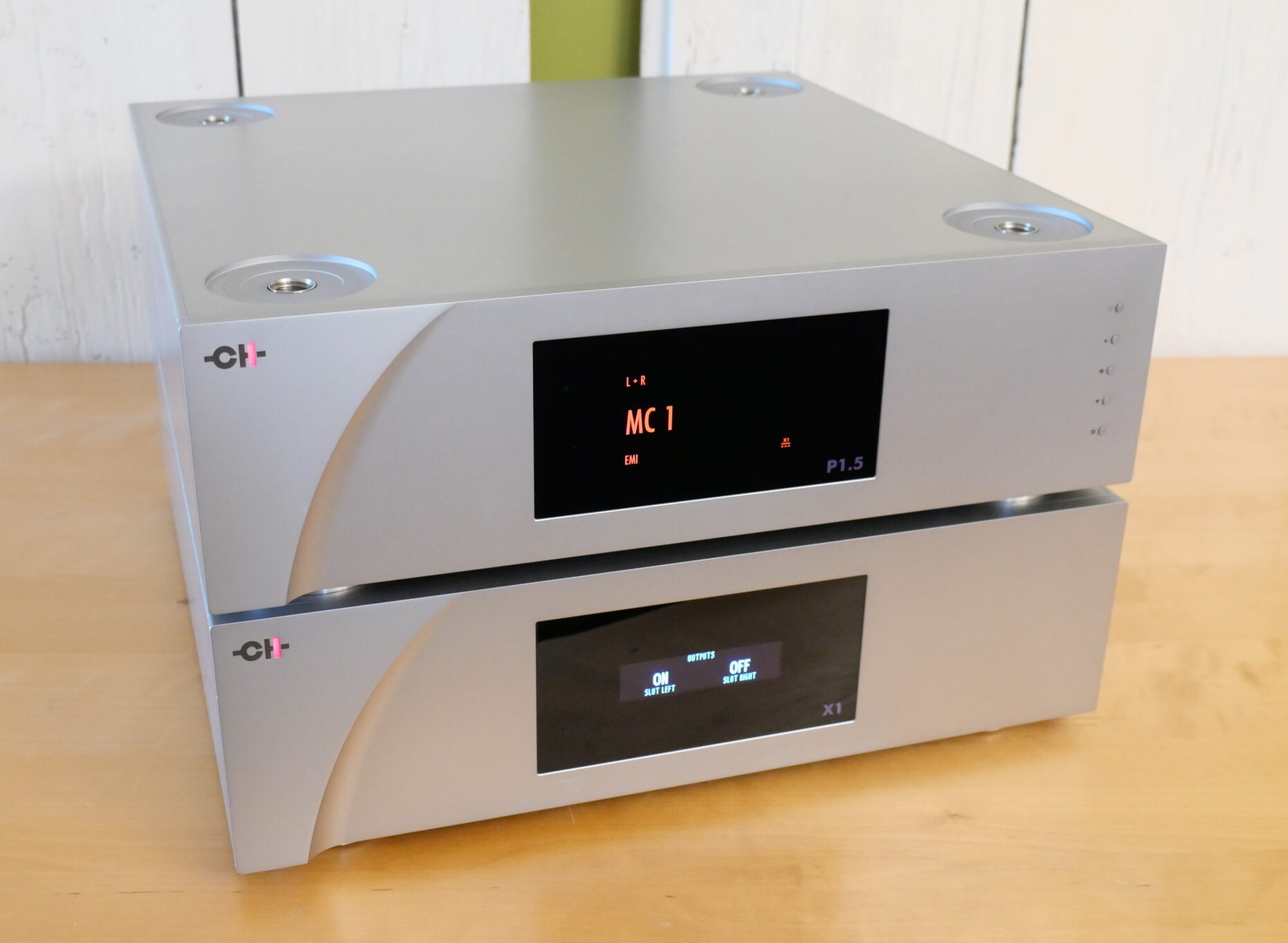
The point here is simple: if a record uses something other than RIAA EQ, then the result of switching to the correct EQ is smack you in the face obvious. Forget assumptions concerning dates and labels. Those things are a guide – at best – although with a little experience it soon becomes obvious when the EQ is ‘off’ – and which curve most probably applies. The bottom line is – if it sounds better and more natural, then it is. Which is where CH has got it right and the P1.5’s remote control comes into its own. The small hand-set only offers five buttons, but by dint of registering both long and short pushes, it allows listeners to switch EQ, invert phase, mute, apply the Neumann high-frequency pole (used on some later lathes) or engage the high-pass rumble filter. The key adjustments are the ones that allow you to flick through the eight, different EQ curves and invert phase, without leaving your listening seat. In conjunction with the colour-coded display, which mimics the colour of the various record labels (so, red for EMI, yellow for Teldec/DGG and plum for Philips) it makes experimenting with changes in EQ simplicity itself, while also adding a visual reminder to help users avoid inadvertently leaving the P1.5 adjusted to the wrong EQ. And it works – beautifully. The kicker being that the added weight, low-frequency transparency and dynamic range of the P1.5 makes differentiating correct EQ both easier and even more musically beneficial. As already listed, the curves are the same as those in the P1, along with the addition of NAB, Capitol and Philips, but now, thanks to the P1.5s lucid musical articulation, you can hear what they do so much more clearly. And whilst regular readers will know the special contempt I hold for all remote controls, whether IR or network-based, this is, along with the C10 control, the exception to that rule. Having the ability to invert the phase of LP replay from the listening chair has made this another, now viable step in optimising record replay.
