

Once you get past the two (or three) massive, captive cables for the power supplies and battery option, the rear panel of the main chassis is almost equally spartan. It offers one pair of balanced/XLR and four pairs of single-ended/RCA inputs and a single set of binding posts for each channel. There’s also a ‘Direct’ input that bypasses the input selector, for use in single source systems, a trimmable pre-out (labelled ‘SUB’) and a tape output (along with the option to add a monitoring function). Input impedance is adjustable using a small bank of input dip switches for each channel, located internally: values range in five steps from 500Ω to 22kΩs. Individual input sensitivity can also be adjusted.
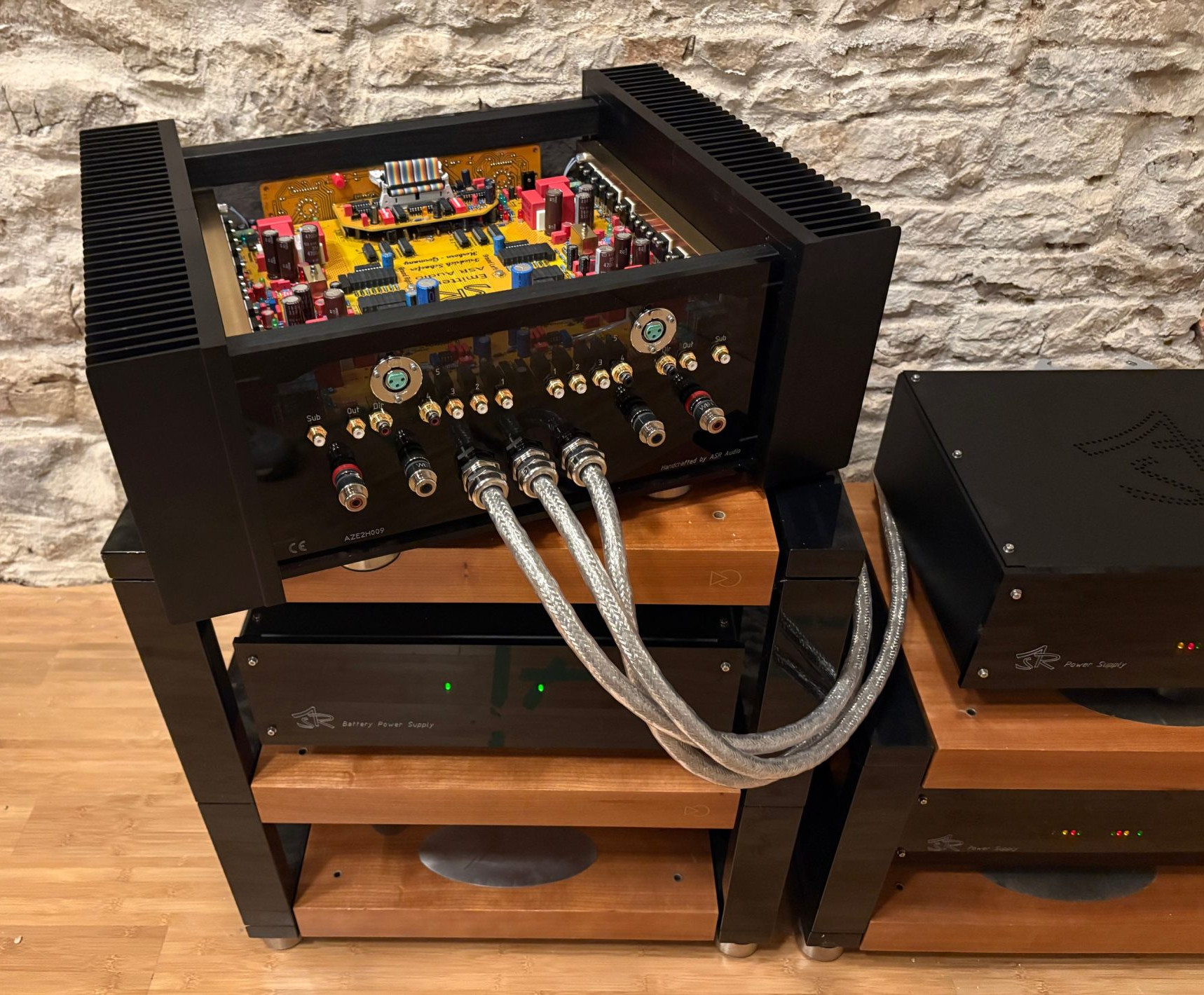
The one thing the ASR doesn’t offer is digital inputs and an internal DAC. Once again, if you find that surprising it’s a result of that ‘integrated’ label and its misapplication to this product. Personally, I find that absence not just a relief but also at least partially responsible for the amplifier’s outstanding performance. The Emitter II is capable of partnering and deserves the best available source components. An internal DAC – and the compromises it entails – have no place in what is above all, a no-compromise design.
The remote handset is carved from a solid block of Corian and, despite its low button count, careful use of the Mode button and short, long or multiple pushes allows access to considerable additional functionality, including balance, the energy saving/full power switch-over point (anywhere between zero and 51 – a crucial factor I’ll be returning to) and all of the display modes. Finally, two sets of four dip switches allow you to adjust the “high frequency compensation” circuit in the amplifier, with higher settings increasing the amplifier’s stability with difficult loudspeaker loads. The increased global feedback also has the effect of smoothing the sound, useful during burn-in of the amplifier or new speakers.
The Emitter II is provided with comprehensive protection against DC offset – either from a source component or as a result of a malfunction within the unit itself – excessive distortion, overload or over temperature. The amplifier switches itself off to protect both its own operation and your speakers. Internally, a huge array of status LEDs populates the main PCB, providing considerable (remote) service information in the event of any fault.
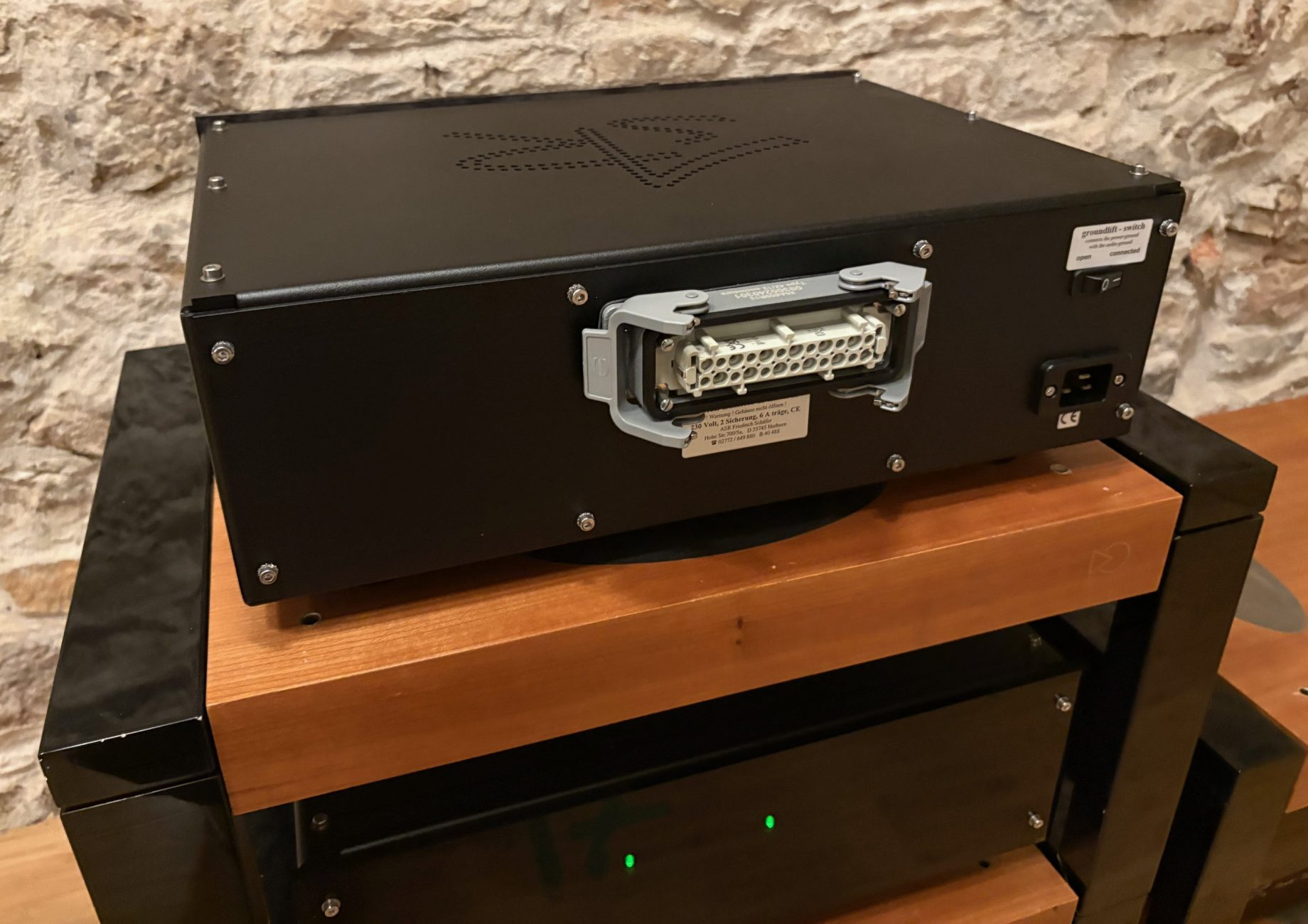
The power supplies are connected via huge, multi contact edge connectors (different sizes for the AC and battery units) that are permanently attached to the thick DC cables. The stiffness of the cables and the weight and size of the connectors (drawn from critical industrial applications) make installation a challenge, perhaps best attempted when calm. However, once hooked up, the connections are extremely secure and I doubt you’ll need to revisit them. ASR also supply a matching, audiophile ASR Magic power cable with each PSU, which potentially amounts to a considerable saving. Each power supply is housed in heavy duty casework to minimise field leakage, with a Perspex front-panel to match the main unit. There are a number of finish options too, from clear acrylic casework to contrasting, silver heatsinks and different display colours (red, yellow, blue or white). Users can also select from an array of connector and fuse options, or specify additional inputs (including a second balanced connection) tape monitoring, a headphone socket and up to three sets of parallel or switchable binding posts. There’s also the opportunity to specify a remote link, so that you can use multiple Emitters in a bi- or tri-amped system. That’s an almost bewildering array of options, making the guidance of the retailer or manufacturer an essential part of getting the best return on your investment. Fortunately, ASR has proved to be both responsive and informative. In stock form the Emitter II is resolutely minimalist, but it can be configured or specified to meet pretty much any system requirement – the limitation being that the adaptability isn’t user configurable within the unit. Of course, that self-contained, built-in versatility is something you can have from products like the CH Precision separates, but at a significantly higher price!