

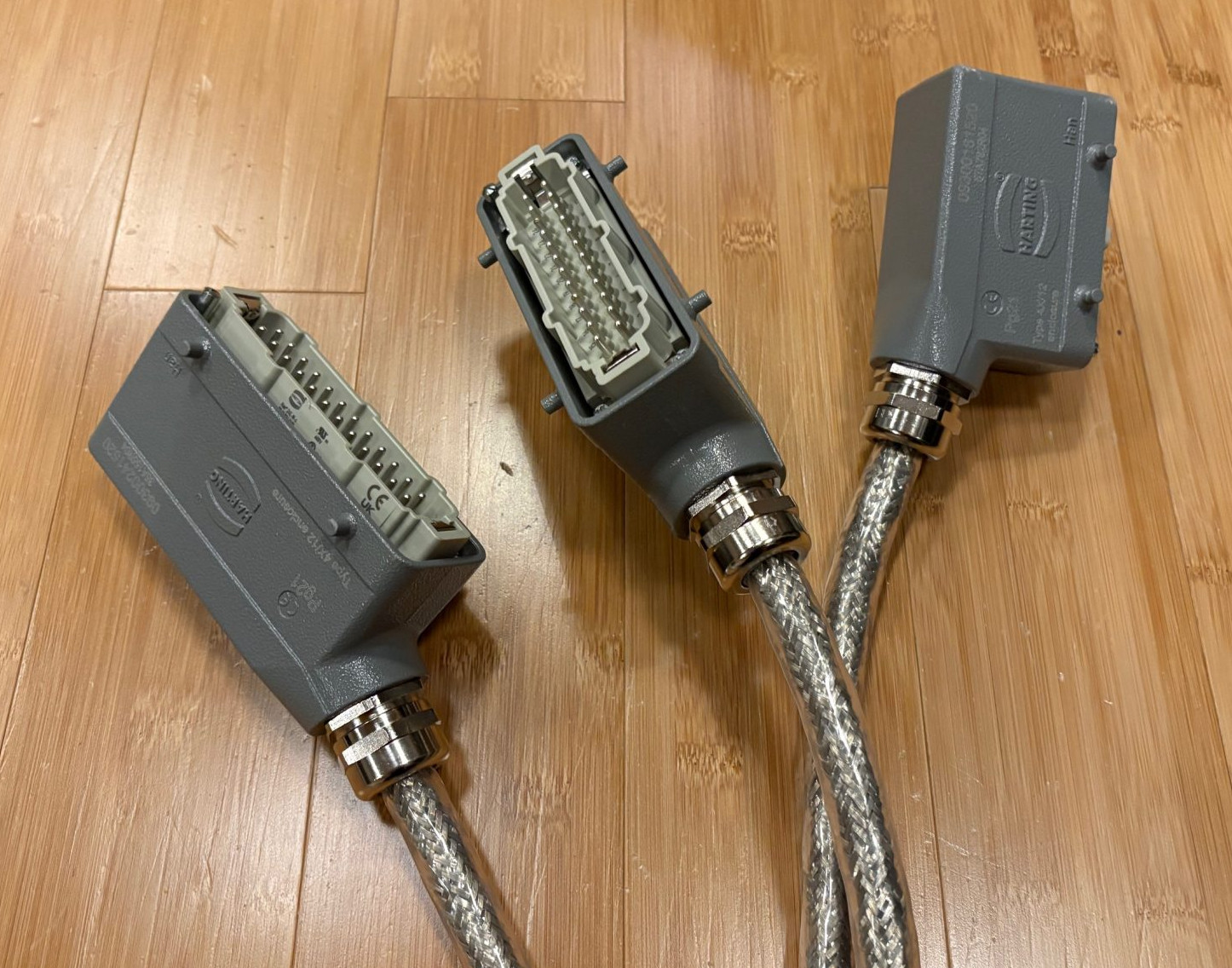
The end result is a considerable stack of weighty hardware, only marginally less daunting than the heap of boxes in which it arrives. The amplifier might be functionally integrated, but physically it’s anything but. All of which makes its pricing perhaps the biggest surprise of all. An Emitter II Basic will cost you €14,750. The Exclusive HV version will stand you in €24,500, while the battery supply adds another €3,750, for an all up total of €28,250. In the US, even after the cost of import and duty, the four-box Emitter II Exclusive HV with battery will only set you back $32,250, (plus local sales tax) an astonishingly reasonable price for a substantial and capable four-box amplification rig in this day and age. What’s even more remarkable is how little those prices have risen over the past few decades.
Back in 2006, when Stereophile reviewed the pre-HV version of the Emitter II Exclusive with the battery power supply, the US asking price was $25k. In the intervening years, the product has undergone a ground-up revision, with upgraded gold-track circuit boards, improved layout, circuit components and output transistors. The HV designation indicates the use of higher voltage capacitors while the rechargeable cells have improved in line with current battery technology and the cabling and connectors to lace the four boxes together have also been substantially improved (and believe me, “substantial” is the word). That represents twenty years of inflation plus a significant improvement in performance and hardware, all for a little less than a 30% increase in price! Would that the rest of the audio industry could follow suit. Any way you look at it, this is a lot of amplifier for the money. Given a reputation that suggests it can compete with some of the very best (or at least, most expensive) amplifiers out there, it looks like an even bigger potential bargain.
Ahhh yes, that reputation…
I first encountered the ASR Emitter II in Harry Pearson’s Sea Cliff reference system, where it was the newly installed ‘world champion’ amplifier, displacing a whole host of huge and hugely expensive ‘separates’. If the notion of HP using a Euro-integrated amp to drive his massive, four-tower Nola speakers was somewhat alien, it was hard to argue with the results. The soundstage was huge and incredibly well-defined, while dynamic range was genuinely awesome. The massive Kodo drum on the Thin Red Line OST literally had the walls of the house juddering in sympathy – and there’s a thing. With that memory etched on my mind, when I first sat down to listen with the ASR amp, I found myself feeling confused (and not a little disappointed): the sound was soft, overly warm and hazy, lacking focus, separation, immediacy and, most surprising of all, lacking dynamic jump. This was not what I was expecting at all…
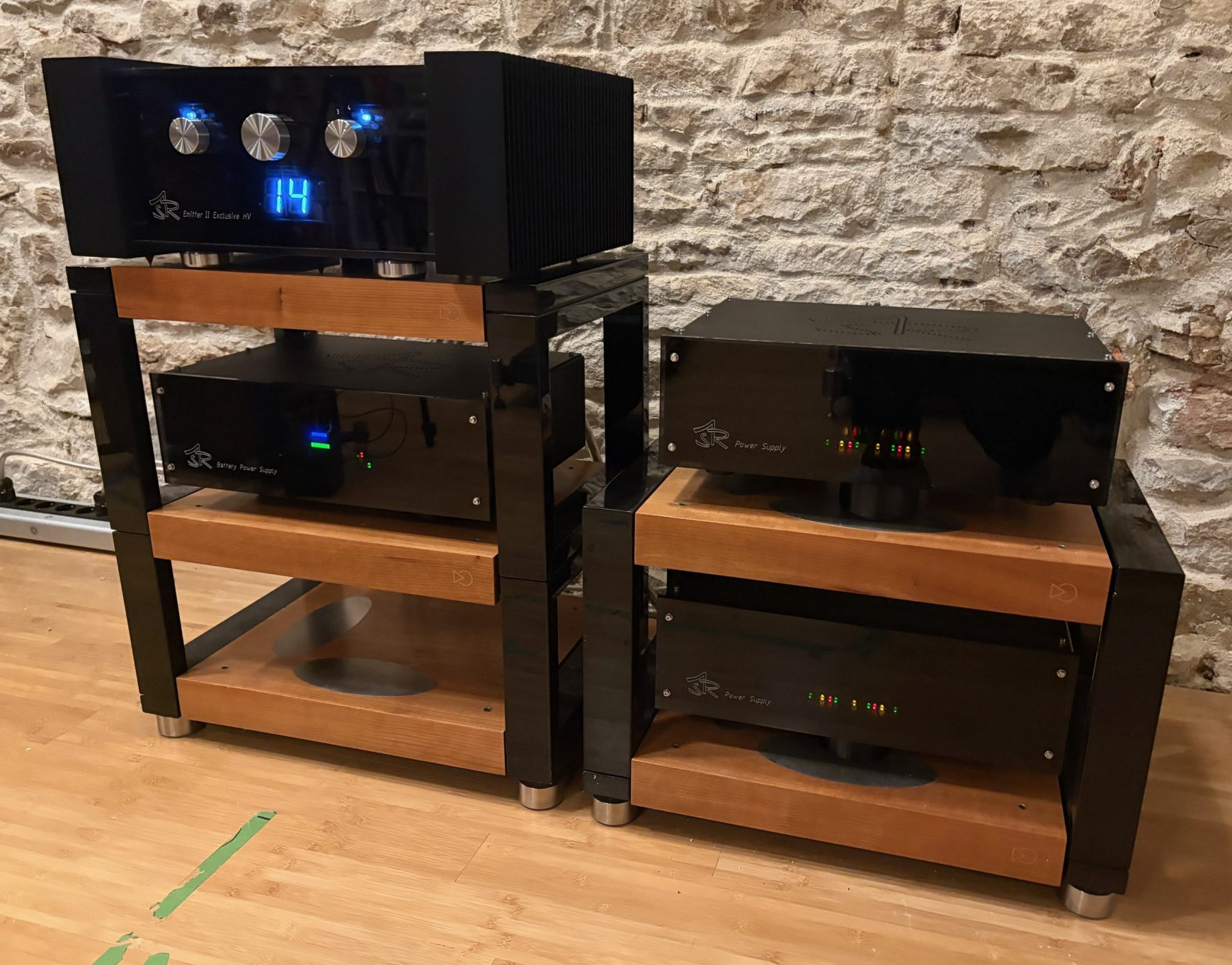
Which brings me back to the amplifier’s functionality and settings. In stock form, the amplifier auto switches from Economy (half-power) mode to full power at an indicated volume level of 35. Running the amp with the available speakers, ranging from the Diptyque Reference IIs to the Peak El Diablos, the volume was barely hitting 50, often hovering closer to the mid 40s. Which is also when it occurred to me just how loud HP used to listen. Meanwhile, I was running the Wadax Ref DAC at 4.0V output, which was making things even worse. A quick experiment, dropping the Ref DAC’s output voltage to 1.0V and increasing the volume level on the Emitter II to 56 and the music sprang to life, gaining the presence, immediacy and focus I was expecting all along. Trimming the impedance of the Ref DAC wrought further benefits, but few front-end components are as finely configurable as the Wadax – which is what makes the adjustability of the ASR so crucial. Given that many current speaker designs have crept over the 90dB sensitivity mark, while many CD players and DACs offer at least 2.0V (rather than the 1.4V used by ASR to calculate the standard settings) the energy saving/full power switch-over setting on the Emitter II seems somewhat anachronistic and certainly could be reassessed. Yes, users can reduce that value (or defeat it altogether) but a factory setting of around 30 would make more sense and deliver more consistent and representative performance in demonstration situations. You never get a second chance to make a first impression…