

After considerable auditioning I settled on defeating the energy saving facility, setting the output of the Wadax to 2.0V and the output impedance on the Ref DAC to 7.5Ω. I left the input sensitivity on the ASR at the standard value and the input impedance at 10kΩ. If your source component doesn’t offer the facility to adjust its output level or impedance, the Emitter II can do both and it’s worth taking the time to really optimise this interface: it has a huge impact on the final musical results.
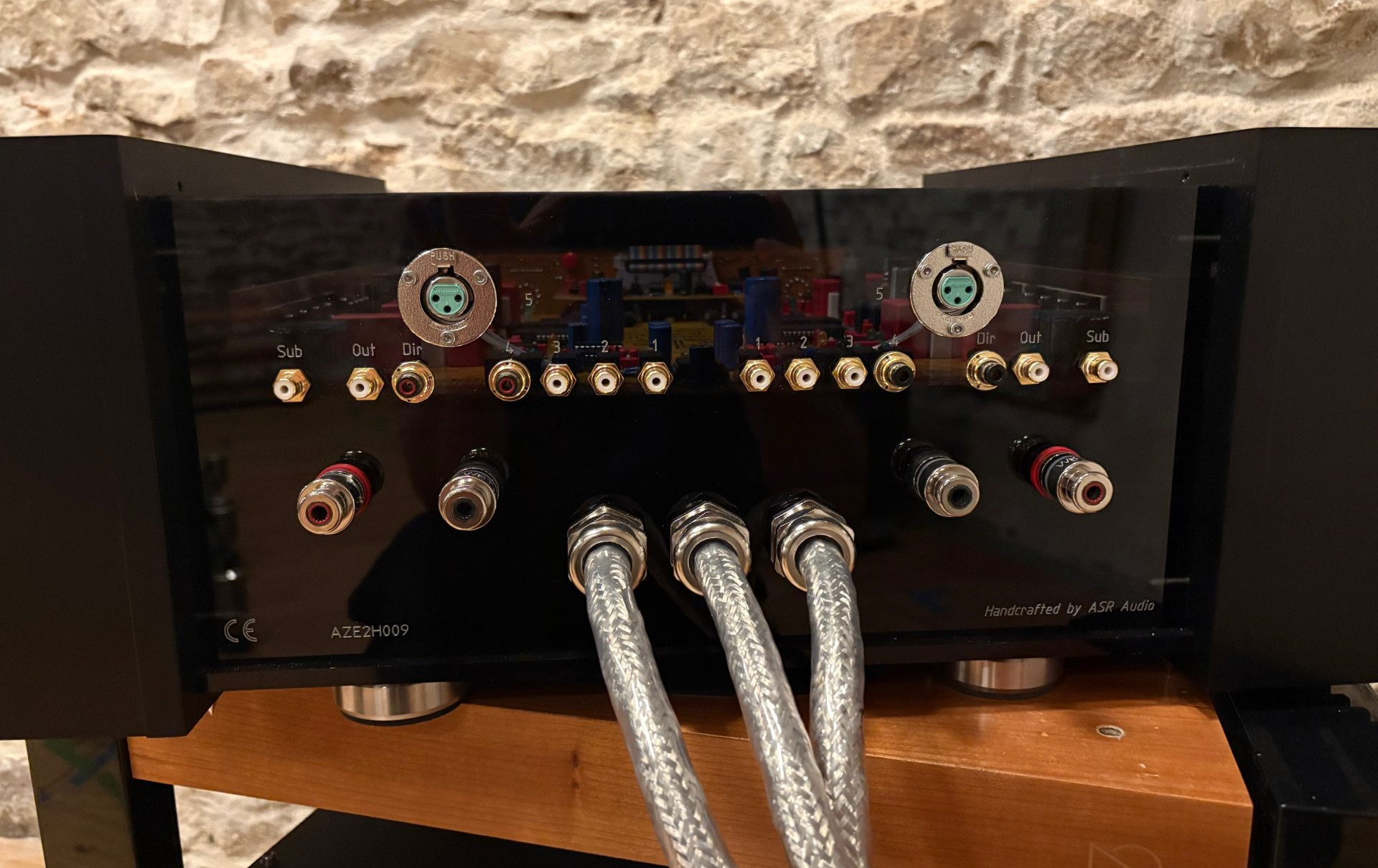
The other thing that you’ll need to consider carefully is speaker positioning and bass balance. I was running the ASR in systems that generally use a lot more amplification – at least in physical/monetary terms. Compared to Kora mono-blocs or bi-amped CH Precision M1.1s, simply substituting the Emitter II was less than optimum, resulting in a sluggish and somewhat sat-on sound. But rather than having to shift the speakers forward to compensate, they needed to shift to the rear, the sheer low-frequency control of the ASR craving additional bottom-end weight to achieve a correct musical balance. That rearward shift brought life, energy and dimensionality, body, presence and smoothness to proceedings. Where previously the system’s sound had been incredibly volume sensitive, with a tendency to tip forward and shout if played too loud, the rearward shift restored the equilibrium, allowing the system to play (significantly) louder without edge or glare.
Finding that sweet spot in the system’s balance needs a special kind of recording – one that shares intimacy with scale, bandwidth and dimensionality. I used Aimee Mann’s Lost In Space (MoFi MFSL UDSACS 2021), especially effective due to its measured tempi and downbeat nature, music that’s utterly intolerant of any rhythmic drag or sluggish bass. Get the speaker positioning just so and the huge, synthetic sound scape that opens the track ‘Real Bad News’ locks in, a deep, swirling space, littered with discrete sonic ‘tics’ against which Mann’s voice enters, solid, separate and breathily intimate. The drum entry is set back but powerful, the building instrumentation fills in the space just behind the vocal, while the broader soundscape remains. The slow tempo adds weight to the dark lyric but never plods or drags. This is a steady, measured pace, chosen to compliment the sense of the song – which it does beautifully. In fact, the bass across the whole album has a sense of temporal security that underpins the music. Tracks like ‘Lost In Space’ or ‘This Is How It Goes’ are anchored by that steady beat, without ever sounding ponderous, so that when the music picks up the pace on ‘The Moth’ it transitions effortlessly to the insistent sense of rhythmic purpose and urgency, from gently pulsing to toe-tapping in the space of a single bar. That’s when you know things are spot on: when the system has that pick-up, when the vocals are immediate and intimate, dimensional, separate and focussed. Ohhh – and listenable: intensely, engagingly, wonderfully listenable.