

Which begs the question – what does the eight-box topology bring to the party? Which is why that’s where I’m going next.
As always, effectively demonstrating musical differences between components is down to your choice of material. In this instance, that’s going to need a few different examples, but I’m going to start with the musical morass – or pomp-rock majesty, depending on your point of view – that is Trick Of The Tail (Genesis – Analogue Productions CAPA 073 SA). Littered with classical motifs, with its heavily figured and layered keyboards and Phil Collins’ thunderous drum patterns, it’s a dense, congested challenge, one of the few discs to defeat the best efforts of the five-box set-up, its dramatic dynamic contrasts and shifts in density swamped by the tidal wave of sound.
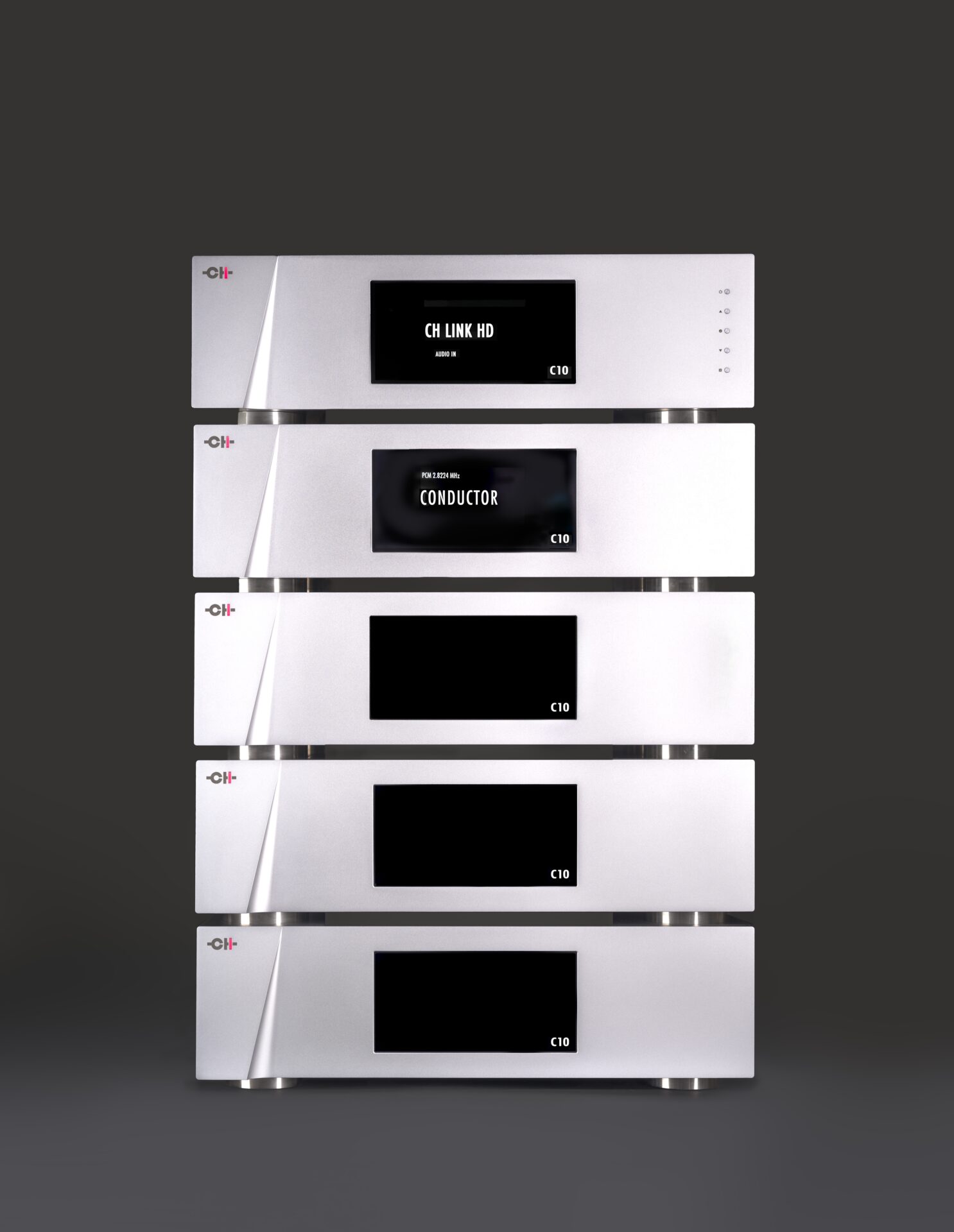
But switch from the C10/2 (the two-box Reference DAC) to the C10/5 (the five-box DAC, the Conductor and Master DAC Mono – or Statement DAC Mono, depending on which labels you’re using today) and the picture changes. Take the opening track, ‘Dance On A Volcano’. The two-box DAC delivers impact on the opening drum beats with impressive leading-edge definition but, as the track builds it becomes progressively more congested and muddled, the vocals submerged in the mix, the space defined by the soundstage awash with keyboards and aimless thudding beats.
Switch up to the C10/5 and the soundstage opens before you, broader, deeper and far more transparent. The opening notes are crisply defined left and right in space while the drum beats are now truly explosive, that leading-edge attack backed up with a new sense of body and substance. The bass reaches deeper and the musical foundation shifts. Now it’s the drums driving the track with the keyboard and guitars layered over the top and behind the vocals. The voice is now unmistakably Phil Collins. On the two-box his emerging vocal talents sounded more like a Gabriel pastiche. Now the lyrics are far more intelligible, the singing more characterful. In terms of sorting out this most congested of productions (while also adding substance, tonal colour, bandwidth and dimensionality) this is a sonic tour de force.
But the real gain is in terms of overall temporal grasp and musical flow. Longer lines make more sense, there’s a measured pacing to the opening fusillade that builds more powerfully into the opening bars and the track as a whole takes on a sense of purpose and direction. The classical structures and phrasing so beloved of Tony Banks and Steve Hackett emerge from the murk, the overarching production and arrangement finally starting to make the same sense I always associate with the vinyl I grew up with – just with a lot more clarity, impact and dynamic range. Mind you, I didn’t have much of a record player back then.