

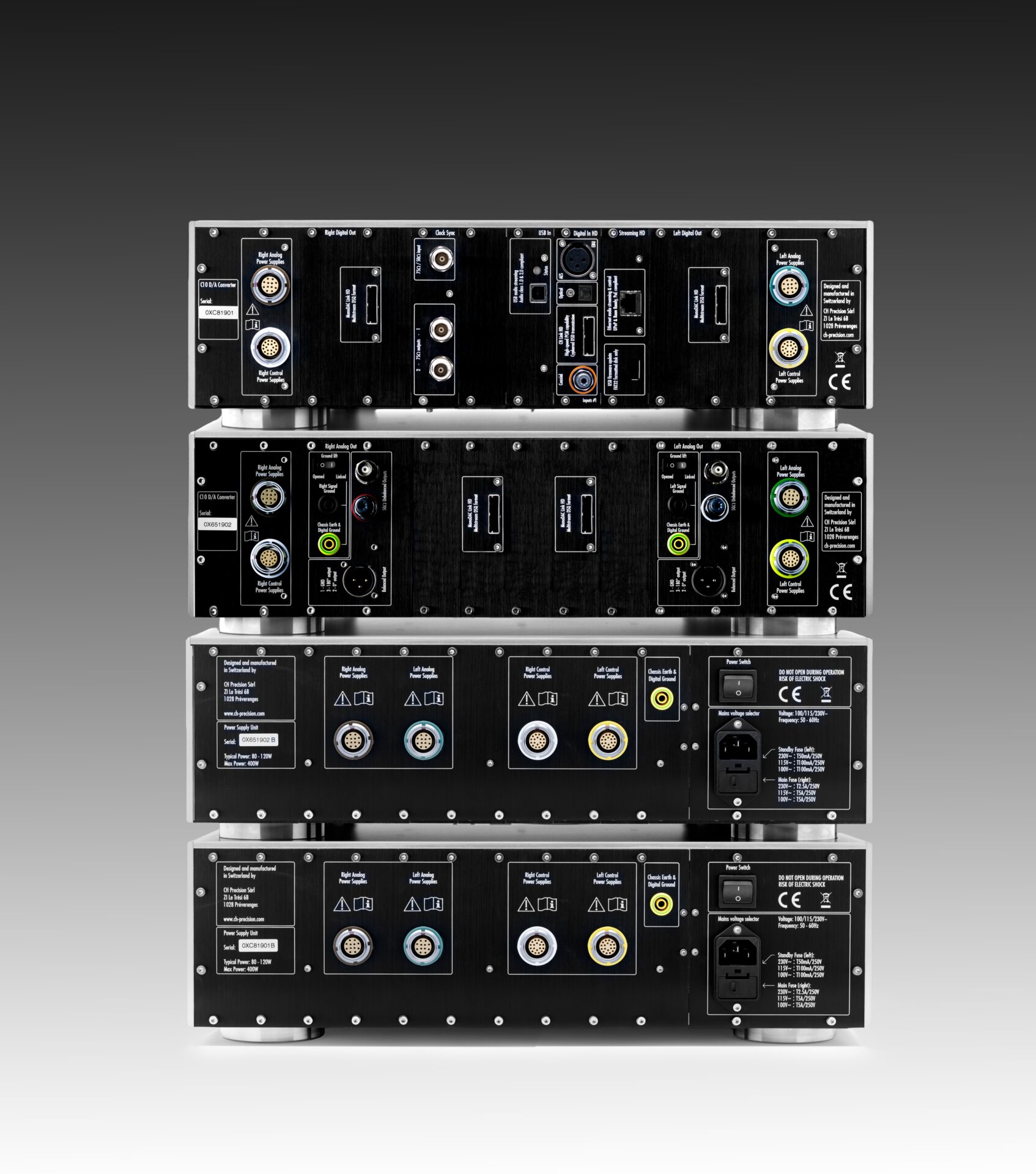
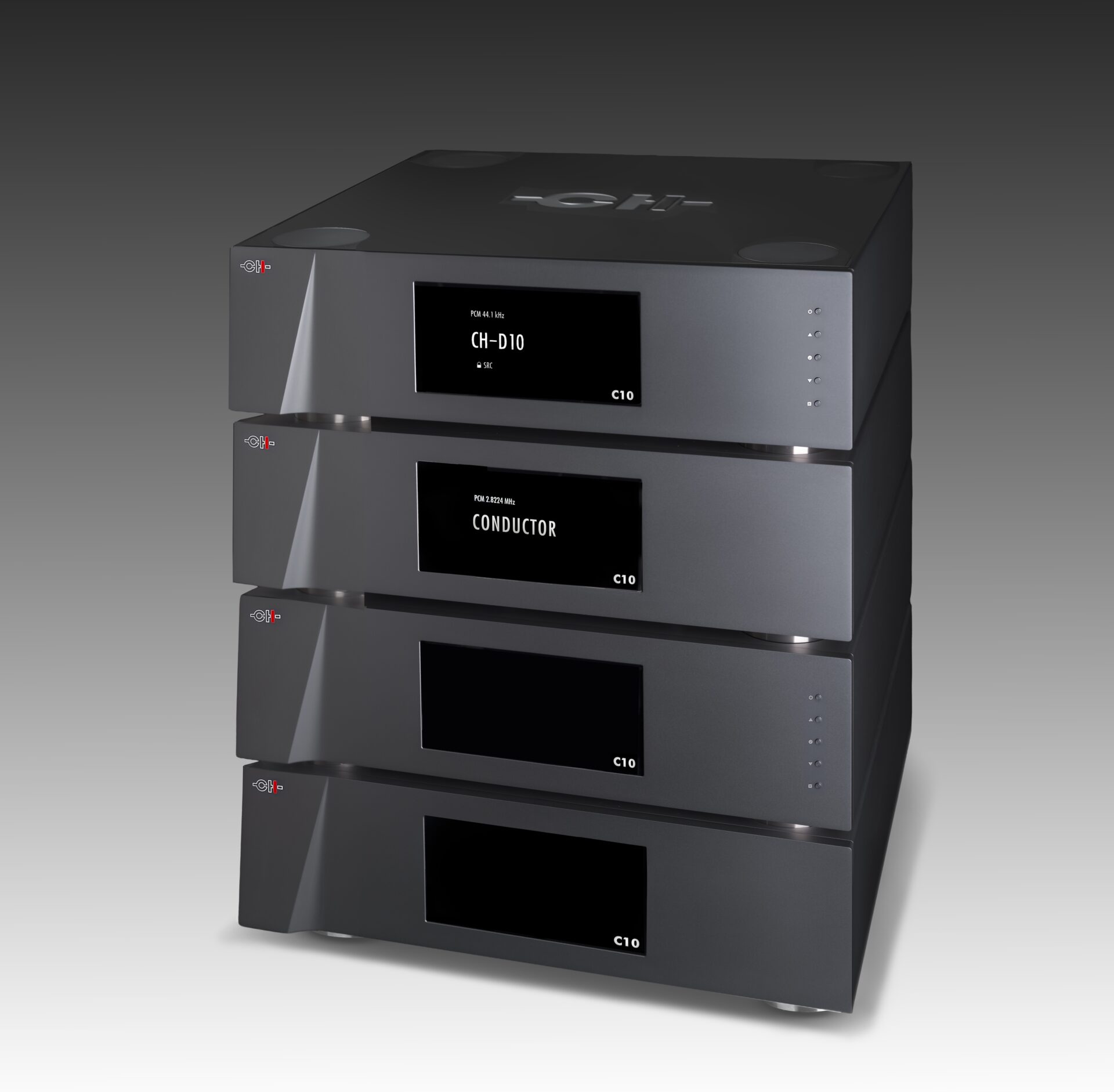
Normally, stepping up from C10/2 to C10/4 is a far more complicated procedure than simply hooking up a couple of extra boxes. As I’ve already laid out above, adding the Conductor to the C10 involves physically separating the DSP and DAC functions previously cohabiting in the C10 – although it might not be immediately apparent what that actually entails. The Conductor upgrade kit consists of an extra, empty chassis and a second power supply, identical to the one supplied with the C10. Your dealer, or a CH trained technician, will open the C10 audio chassis, and transfer the DAC cards into the ‘empty’ unit. Of course, that unit isn’t actually empty. Instead it contains the connections and circuitry to accept the DAC cards. The processed signal, up-sampled and spline-filtered, passes to the now separate DAC chassis down a pair of CH Precisions proprietary CH-Link native HD capable cables. All switching, settings and display functions are available via the Conductor that, Cuckoo-like, has now colonised what used to be the C10 audio chassis. The DAC chassis is devoid of buttons, while the display boldly (and somewhat confusingly) states Conductor – the connected source. It also confirms the operating frequency (2.8224 MHz) and output level: Switch on for the two power supplies is independent (with rear rocker switches) but the front-panel button on the Conductor powers-up all four boxes from standby.
The surgery required by the upgrade would normally make A/B/A comparisons less than swift, but in this instance I had both C10/2 and C10/4 units on hand, so comparing the two was as simple as swapping the CH Link input from the D10 from one to the other. With its complex dynamic and rhythmic demands, the Schuman Festival Overture offers the perfect basis for comparison. With this demanding music and performance, the C10/2 struggles to impose its normal sense of lucid organisation and clarity. The soundstage sounds narrow and congested, lacking space and air, while the playing is pushy and regimented, running pell-mell through the score. The low-frequencies are murky and thick, lacking texture and transparency. Yet, despite that damning description, the CH is still doing better here than most CD players, significantly better than even the best server/streamers.
Switching up to the C10/4, separating the DSP and DAC sections and giving each its own, dedicated supply, is transformative. The soundstage opens out, gaining intra-instrumental space, depth and air. The added height extends up and down, the bass gaining transparency and texture, especially on the skins of the timps and bass drum. You can hear the impact of mallet on skin and the enclosed air, the tonal palette blossoms, gaining warmth, colour and richness. But the really big difference is in terms of pacing and direction. The space between notes and phrases adds temporal and rhythmic subtlety and sophistication to the performance. Rather than an avalanche of sound it becomes a carefully constructed and directed collage, a collective enterprise in which you can clearly ‘hear’ Bernstein’s guiding hand. Rather than a hectoring challenge to your auditory senses, it becomes an exciting, dramatic and intensely musical experience – one that demands extreme insight and expressive range on the part of the player to accomplish. Let the disc run and you’ll hear the unmistakable opening bars of Barber’s horribly over-exposed Adagio – but wait, let it run further and you’ll be rewarded with a performance of unusual emotional subtlety, poignant rather than mawkishly sentimental, proof positive of both Bernstein’s and the C10/4’s emotional range and compass.