

The 921’s functional simplicity is reflected in the elegant, attractive, modern minimalism of its exterior: ‘elegant’ because somebody took the time and trouble to consider its layout and proportions; ‘attractive’ not least because of the soft-touch, stealth black finish (that can only be described as “rude”); ‘modern and minimalist’ thanks to the single, large volume/control knob, the menu driven configuration options, the large ‘dad legible’ display and the now seemingly ubiquitous CNC detailing and rebates that accent the front-panel. With its brooding, matt black aesthetic and full-width casework, audiophiles of a certain age might look at it and think, “Grown up 820-BX2” – and in some ways, they wouldn’t be far wrong. It’s just that growing up, like the Cyrus integrateds, the Trilogy 921 has got a whole lot classier and much more sophisticated – sonically, musically and functionally.
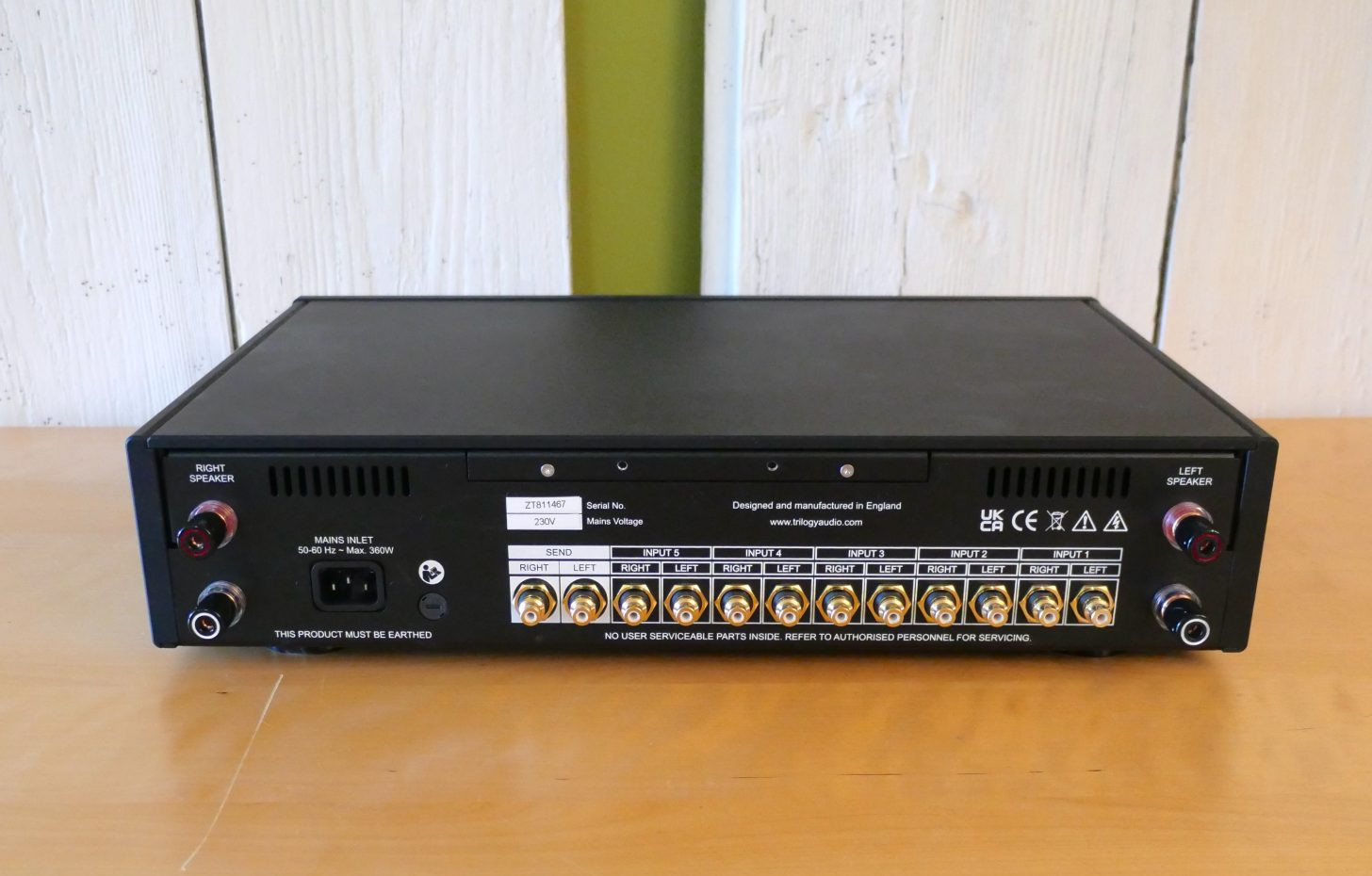
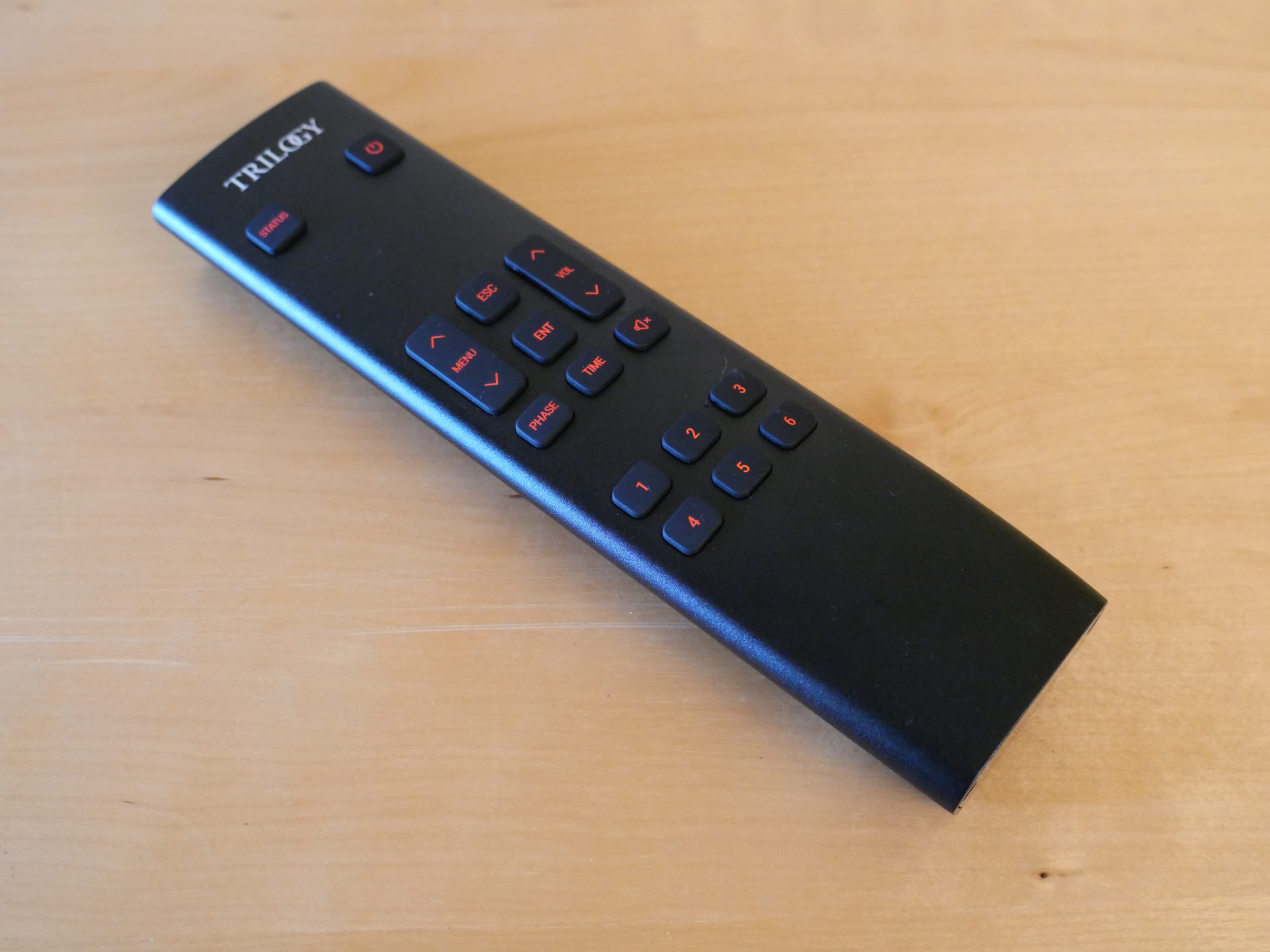
In terms of functionality, the 921 offers users five single-ended inputs and one fixed output (all on RCA) and a single set of speaker binding posts. The (configurable, dimmable, defeatable) display is big enough and bright enough to read from across the room and if the single, big control suggests ultimate simplicity, the array of buttons on the remote should make you think again. As well as the six numbered input/output buttons, mute and phase, there’s a set of Menu controls and a Time button. Modern software control offers all sorts of sonic and musical advantages, such as discrete resistor ladders for volume control. But once you’ve got the software embedded in the unit, it opens up a host of what amount to zero-cost options. In the case of the 921, those include balance, adjustable sensitivity and naming (up to nine characters) for each input and various timed functions (switch on, switch off, sleep). You can use the 921 like a glorified clock/radio if you want to. You can also set start-up and maximum volume levels.
Running what might be termed the one-time or occasional use settings via background menus is what allows the 921 to maintain that elegantly svelte profile, its minimal controls (the knob and three push buttons) adding to, rather than detracting from, its appearance. For once, the menu navigation is clear and intuitive, while sensibly, both mute and balance are more immediately accessible. It’s also worth noting that the solidly constructed remote is neither too big nor too heavy, while the buttons are sensibly and subtly illuminated in red, to match the amp’s display.
If the exterior of the 921 is a model of common sense and stylishly clean, it’s simply an extension of the interior thinking. Trilogy has chosen to dispense with conventional, multi-stage amplifier topology. The 921 contains no line-stage. Instead, it is essentially a power-amp with source select and volume control sat in front of it. Unlike most other Trilogy products, it is also a pure, solid-state design, even if its circuit topology, especially the compound output stage, relates closely to the bigger, hybrid mono-blocs. A single voltage gain-stage is used, feeding the same, high-quality, selected output devices used in the flagship 995R. Keeping the signal path even shorter, the gain stage is stacked and co-located with the output stage. Left and right channels receive independently regulated and smoothed DC. Far from paying lip-service to the notion of minimalism, this is genuine minimalism where it really matters. The result is wide bandwidth and a useful damping factor with minimal shunt feedback, allowing the 921 to control speakers with far more authority and fluid grace than its 75watt rated output might suggest.