
Hidden charms…
Roy Gregory
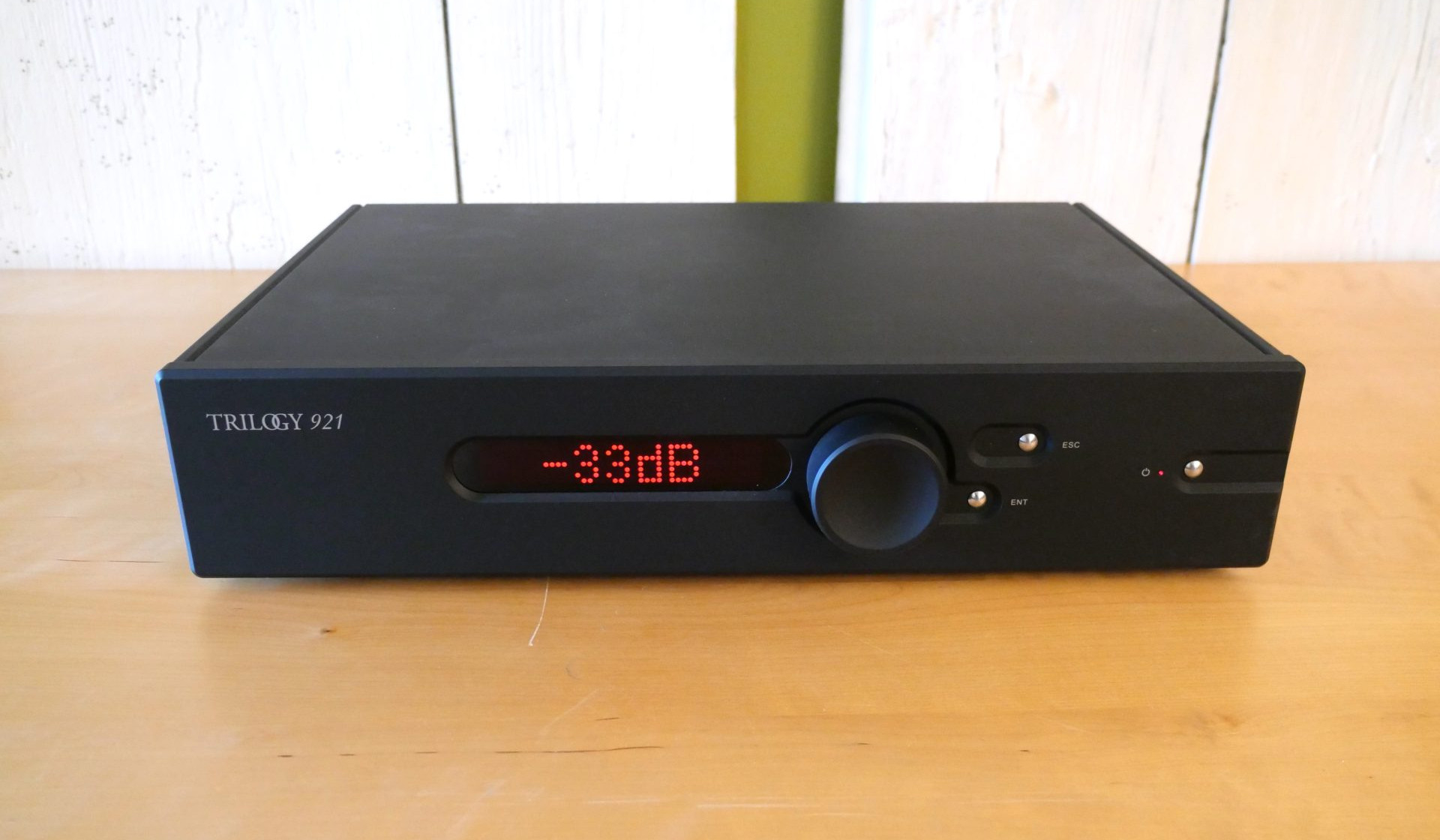
It used to be that, when you invested in an integrated amp, you knew exactly what you were buying. Essentially, the functionality and facilities of a separate pre- and power amp, built into a single chassis, sharing the bodywork and a single power supply. Then things started to get more complicated and bits started to get shed…
First to go were ‘non-essential’ elements, like tone controls, speaker switching, a loudness button and even a balance control – all in the name of a shorter, cleaner signal path. Next to go was the phono-stage, rendered irrelevant by the arrival of CD: first it became an option; then it disappeared altogether. Adding an additional, external power amp became a popular optional upgrade. Soon we saw the arrival of internal DACs, again optional to start with but now almost de rigueur. Finally, the whole beast transmogrified into ‘budget esoterica’, the bastard child of the rising prices of high-end amplification and the insatiable human desire (delusion?) to get something for (almost) nothing. These days, the humble integrated amp has ballooned into an audio Mr. Creosote, a streaming platform with the all-important full-colour display, myriad digital inputs and outputs, analogue inputs (if you are lucky) and a power rating that might bring the national grid to its knees. In all too many cases, the phrase “All dressed up and going nowhere” is the one that springs to mind. It’s not that there’s nowhere to go: it’s more that these overweight, over-complicated and over-populated behemoths ain’t going to get you there.
Back when the world was young and I worked in audio retail, we sold heaps of hair-shirt integrated amps – mainly the Rotel 820-BX2 and Mission Cyrus One, the latter, with its shoe-box form factor offering even fewer facilities than the more conventional Rotel. They sounded great, especially for the money. No nonsense, honest products that simply did what you needed them to – and nothing else. The little Cyrus still exists, albeit in a more refined, more sophisticated and expandable form. But its essential nature remains, demonstrating the longevity of the stripped back concept – source selection, volume and some speaker binding posts: job done.
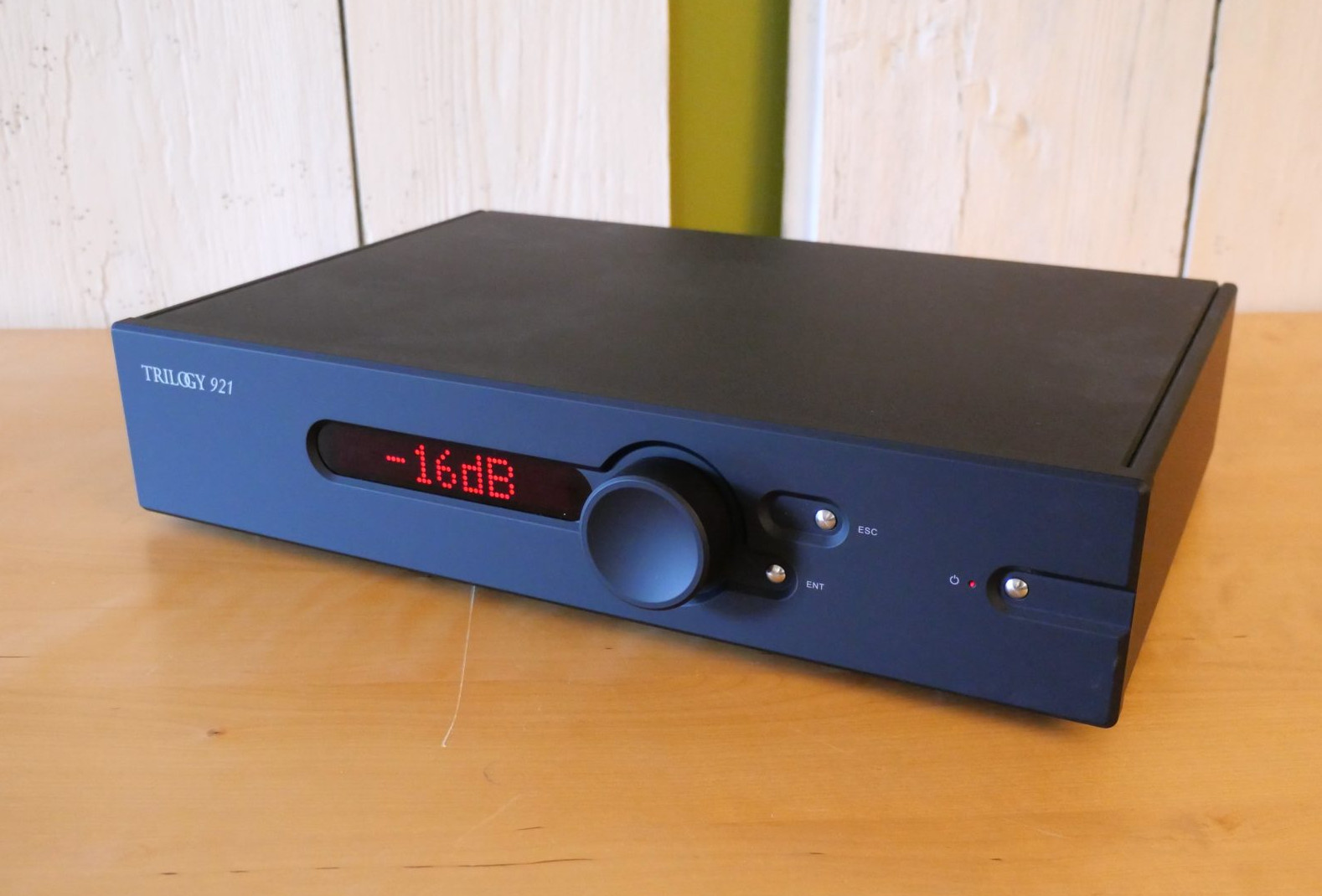
Which pretty much describes Trilogy’s 921 an integrated amp that’s just that: amplification integrated into a single box. This is a straightforward analogue amplifier. No DAC, no streaming, no cover-art displayed on the front panel, no unnecessary digital do-dads or wireless connectivity. At £6,500 in its black finish (inc. sales tax, £6,200 in silver) that might seem like a lot for an amplifier bereft of digital decoding, except that, musically speaking, the 921 can happily compete with any integrated I’ve heard out to at least £10K – and that gives you £3,500 towards a DAC in a separate box, which is where it should be.
Sooner or later people will realise that splicing digital and analogue circuitry into one chassis is never a good idea: either the digital stuff messes with the analogue or vice-versa. A product like CH Precision’s I1 only works because its front-end is essentially all digital, with all of the control and configuration functionality done in the digital domain. Even the analogue and phono inputs go through an A-to-D. In switching and signal control terms, you need to decide: analogue or digital. You can have both: you just shouldn’t. Trilogy’s resolutely analogue approach is just fine with me and I’ll happily pair the 921 with an external DAC or digital player.