

But I’m getting ahead of myself. Perhaps I should start with the basics…
The essential recipe is familiar: a platter supported by a standing bearing, supported on three springs; off-board motor, driving the platter via a belt. To look at the LP12, you’d think that the three-point suspended design was frozen in aspic, but a surprising range of variations exist, from skeletal sub-chassis designs like the Oracle and GyroDec, inverted bearings and hanging suspensions – but the concept has remained largely the same since AR and Thorens invented it. Systemdek designer Peter Dunlop was early to the feast and that tendency to early adoption never deserted him, or his sons Derek and Ramsay who now run the company. Systemdek was the first to use a mixed material, bonded, constrained layer sub-chassis. It introduced the concave platter and clamp. It was quick to adopt the hanging suspension, further exploiting the stability of its low-frequency suspension rate, a notable difference to the markedly more nervous bounce of the LP12. At the same time, the company wasn’t averse to applying its knowledge and experience to lower price points – and considerable effect. That solid engineering and carefully chosen materials produced the IIX, a design that lives on in the shape of various AudioNote turntable models.
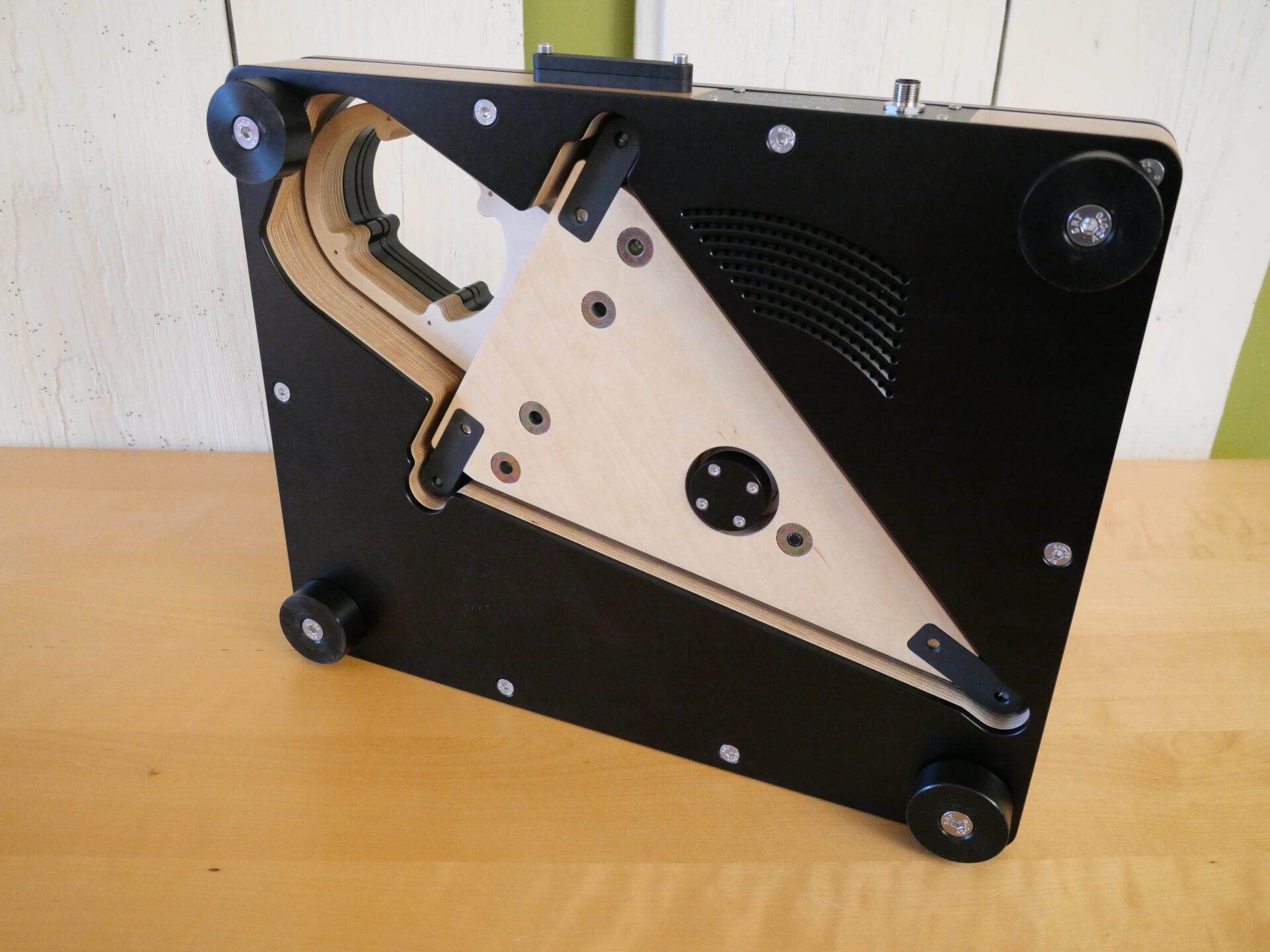
Look at the Revolution in detail and it quickly becomes apparent that it embraces and embodies the company’s long history in a single, elegantly engineered and executed design. Its stable, hanging, three-point suspension harks back directly to the IIX, as does the clever, cost-effective choice of materials. The massive, 50mm deep, Delrin platter and large diameter, magnetically-opposed, zero-contact, oil-bath bearing come straight from the flagship ‘tables, as do the pleasing overall aesthetics. But this is no Precision-lite, a cut-down version of a bigger deck. This is a thoughtful evolution that extends performance while reducing cost. As impressive as the much more expensive models it replaces undoubtedly were, the Revolution sounds better. To these eyes, it looks better too – and a lot of that is down to the chosen materials.
The Revolution’s appearance is dominated by that huge, matt-black platter and the matching up-stand that supports the tonearm. They’re features inherited directly from the preceding and far more expensive Precision model, but rather than the ‘brick out-house’, machined aluminium plinth used there, the Revolution adopts a less costly but arguably more effective, mixed materials approach, its matching black top-plate and contrasting laminated birch-ply plinth both more attractive and offering more pleasing proportions. As already described, the 2” deep platter sits on a magnetically opposed bearing, but it’s an arrangement that bears far closer scrutiny.
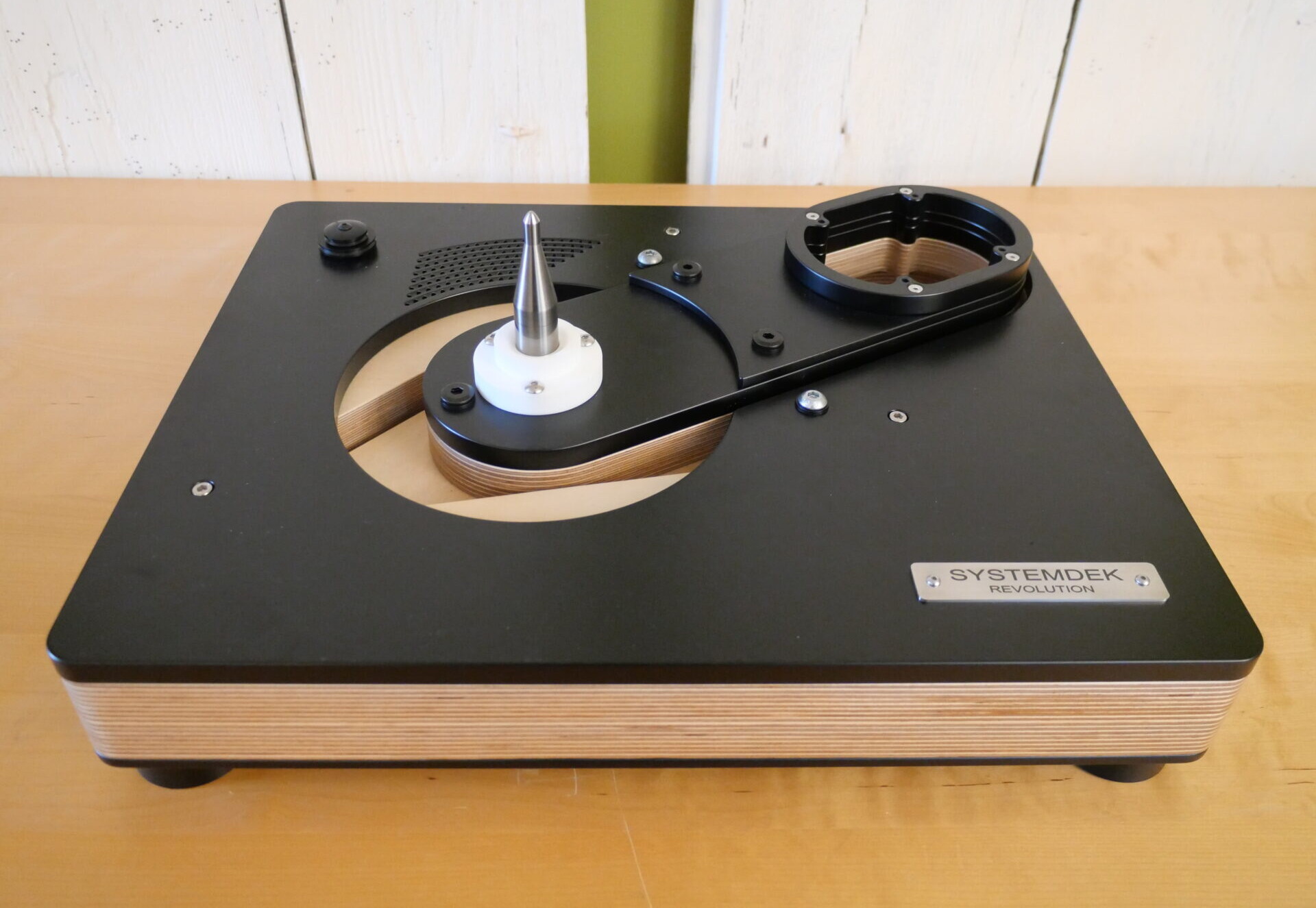
The main bearing sits at the heart of every turntable, literally and metaphorically. The Systemdek is no exception, so it’s reassuring to see just how much care has been expended on the bearing – and platter. The large diameter bearing shaft sits in a deep, solid PTFE well, supported by the opposed magnets at its base. The well is flooded with oil, creating a thin layer between the shaft and the bearing walls – a zero-contact arrangement that all but eliminates bearing noise. The hydro-static design also damps rotational motion, aiding speed stability. The top of the 20mm shaft tapers sharply, ensuring accurate location of the one-piece platter. Delrin is an engineering polymer that, unlike acrylic, can be machined to similar tolerances achieved with aluminium alloys, such as the Mazak used by the LP12 and early Systemdeks. That close tolerance machining and the positive location ensured by the tapered spindle add up to exceptional concentricity, vital in a suspended deck if you are to avoid rotational modes which can destroy speed stability.