

Cartridges were, variously, the Nagaoka MP-500 moving-magnet, the Ortofon SPU Royal N and, looking to stretch the ‘table’s performance, the Lyra Etna Lambda, while phono-stages ranged from the (distinctly price-appropriate) internal stage in the VTL TL5.5 Series II and TEAD MicroGroove Mk2.5, to the more ambitious Groove+ SRX Mk II and ASR Basis Exclusiv HV, to the (totally price-inappropriate) CH Precision P1/X1 pairing.
Given the sheer range of price and performance variations across those partners, it was remarkable just how comfortable the Revolution was, even in the most exalted company, how complete it managed to sound, how well it covered its tracks. While the combined price of the HR-200S and Lyra cartridge exceeds the price of the Systemdek ‘table and power-supply by almost 50%, the combination never sounded unbalanced, the ‘table never sounding out of its depth or performance limiting. Likewise, the sheer range of combinations tried says a lot about the engaging and enjoyable performance delivered by the Revolution. It actively encouraged me to stretch it and test its limits. I’m not sure I’ve found them yet, while future plans promise even more from this unassuming turntable.
“The Force is strong with this one.”
Anybody familiar with the calm stability of the sonic picture presented by the Systemdek III, Precision or Reference ‘tables, their uncanny ability to ‘float’ the soundstage, will immediately recognize that same quality in the Revolution. The Systemdek DNA runs strong, but like all the best genetic strains, it has also evolved. The Revolution combines the quiet, grain-free sound of ‘tables like the Precision and Reference, with the attractive, lively and rhythmically involving sound of the IIX. It makes for a musically potent combination: tonally natural, smooth, refined and with an unforced sense of rhythm and musical organization.
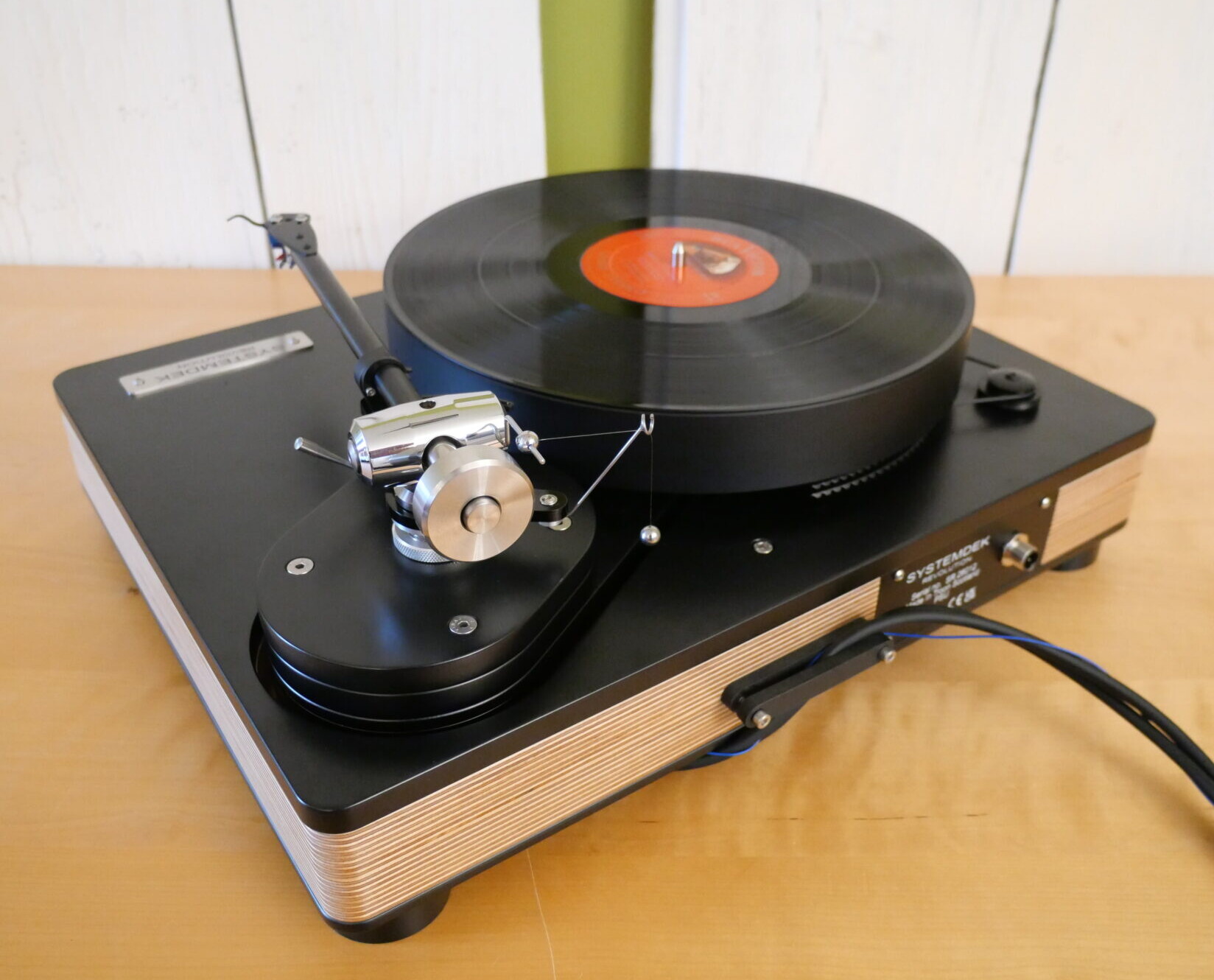
Listen to the direct cut disc, Vivaldi In London (VALDC017, Chasing The Dragon’s follow up to the excellent Vivaldi In Venice) and the combination of the disc’s immediacy, the original instruments and the small group setting combine to capture vividly natural dynamics, textures and harmonics, while the music has all the predictable pattern and symmetry that makes baroque compositions so engaging and satisfying. The Revolution reproduces those instrumental textures and harmonics beautifully, with natural tonality and layering. The woody, vibrant character of Davide Amadio’s cello has a natural body and complexity that brings convincing and expressive presence. The sound of the harpsichord, so often reduced to tinkling strings, has body too. The rest of the band are spaced and separated in an arc behind him, with natural scale and depth. Whilst the Revolution’s soundstage doesn’t match the completeness or map the boundaries of the recording’s acoustic as clearly as the Reference ‘table, it doesn’t have the help of the Kuzma 4Point tonearm. But what is immediately obvious is that, irrespective of the arm being used, the soundstage is independent, free from both the speakers and the listening room’s walls. The Alphason arms offer finer resolution, separation and even greater tonal purity, the Origin Live Zephyr more emphatic dynamics and purposeful drive. But in both cases, the music is presented, free from the system and free from mechanical artefacts.