

It’s not a one-hit wonder or one-trick pony either. You are going to get that performance whatever you play, across a range of records and genres. Play ‘Steppin’ Out’ (from Joe Jackson, Night And Day – Intervention Records IR-003) and the peppy, undulating synth line is toe-tappingly infectious, the piano and tinkling bells perfectly synched and separated. Joe’s vocals might surprise you too: thoughtfully shaped, beautifully phrased and intelligible. But it’s not just the quicker, dancier tracks on which the Systemdek excels. The slower songs on the album are just as affective. ‘Breaking Us in Two’, ‘Real Men’ and ‘Slow Song’ are all just as deftly handled, the pattering percussion, the space in the arrangements, the emotional intensity in the vocals. The ‘table changes pace effortlessly, seamlessly transitioning between tracks and tempi, locking onto the rhythms and pauses, the subtle push or hesitation that shape tracks and add musical or expressive range.
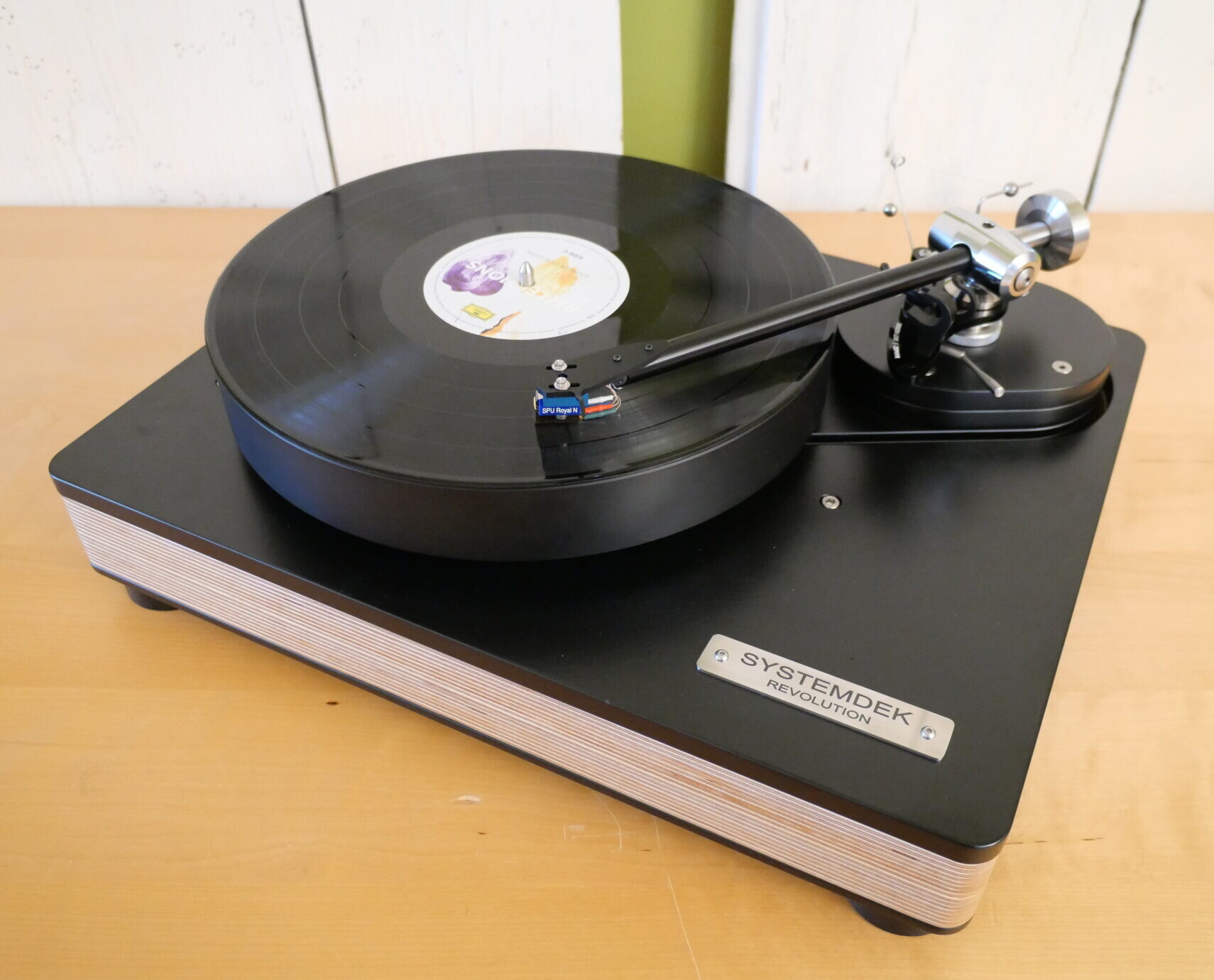
If the Systemdek has a musical Achilles heel, it’s that its smooth, unforced delivery can be mistaken for a lack of drive or excitement, qualities that are so often associated with a clipped or edgy sound. While dynamics are perfectly scaled and the harmonic tail of notes is nicely preserved, the subtle loss of attack, relative to hard-grounded designs, combined with the natural tonality and easy grasp of pace produces a relaxed sound that can be enjoyed for hours – but which might also be perceived as lazy. My own experience tells me two things: listen closer and you’ll realise that the deck simply isn’t shoving the recording down your throat, instead allowing it to speak for itself; and secondly, if the deck DOES sound lazy, it’s almost certainly a function of set-up. If the level of the sub-chassis falls out of true, then the sound can become sluggish. Fortunately, once set, the suspension stays set, but you do need to pay attention to getting it right in the first place – and that includes setting up with a record of appropriate weight: appropriate to what you play, that is. It’s tempting to use some nasty old flexi-disc for set-up, but if the records you actually play weigh more, it’s worth using one of those. Every little helps.
Counteracting that is the deck’s ability to play nice with a whole host of different arms, bringing the best out of its partnering equipment. The Origin Live Zephyr sounds enthusiastic and engaging, the Alphason arms progressively more refined, with higher resolution and a broader tonal palette. Which begs the question, just how far can the Revolution go? While the Kuzma 4Point was a superb partner for the Systemdek Reference and Precision, their higher suspended mass (well into double figures) was better able to handle the sheer weight of the big Kuzma tonearm. The Revolution would certainly struggle. But the 4Point9 weighs in at slightly less than the 2050g of the standard 4point, the ‘benefit’ of sacrificing the VTA tower. That certainly brings it into consideration, while the likes of the SUPATRAC Nighthawk and Wand Dark-Light are obvious contenders. I’ll be investigating further, to see whether the Systemdek can raise its game – and whether it makes financial and musical sense to take it there.