

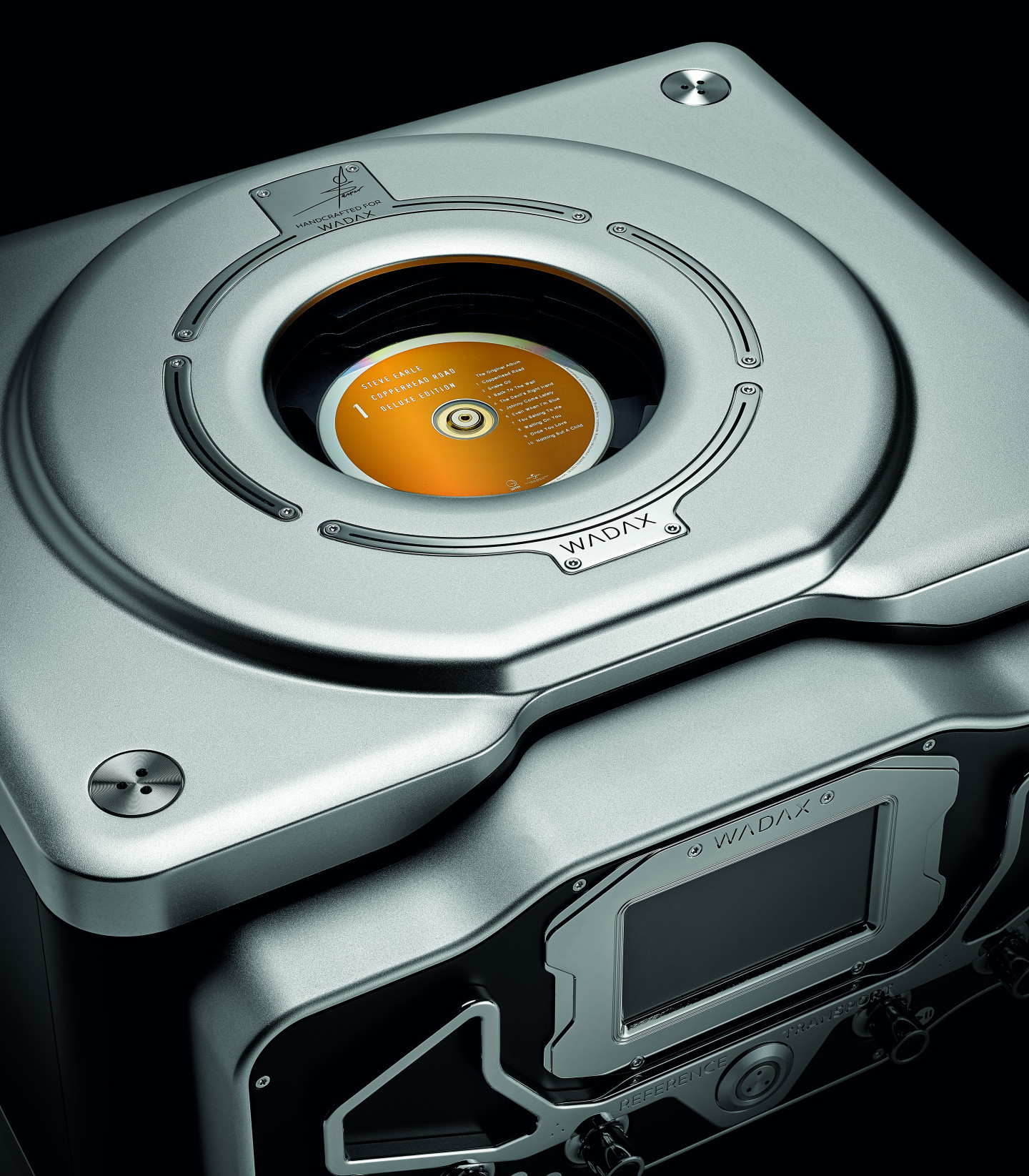
As well as the Akasa optical output – which can only be used with the Ref DAC, the rear panel of the Reference Transport also offers AES/EBU, RCA and BNC ‘legacy’ outputs – although I can’t see too many Wadax transports being used with alternative DACS. This is where I need to warn you about the rear view shown on the Wadax website: presumably a shot of the engineering prototype, the connectivity shown bears no relation to the final version. The triple XLR sockets and RJ45 connection for the Reference link have been eliminated and the Neutrik PowerCon socket for the external PSU input is no longer labelled “Output”. The internet and service ports remain, for software update purposes.
Installation and set-up
The first thing to note when it comes to installing the Reference Transport is just how seriously heavy it really is. If you thought the Reference DAC or Server weighed a lot, think again! At almost 100kgs (well over 200lbs) the Transport is heavier than most power amps. The only unit I have in house that weighs more is the VTL S400 (think Siegfried but with two output transformers!). That makes the unit a definite two-man lift. I’m used to moving heavy kit: it’s pretty much a prerequisite requirement when it comes to reviewing high-end audio equipment. I wouldn’t even consider trying to place the Reference Transport single handed.
The second consideration relates to the eight feet fitted to the unit. On arrival these are shod with lightweight shoes to prevent damage to a supporting surface. If you are sticking with the Wadax feet, those shoes need to go. The Wadax units sound much better sat – as intended – on the stainless steel cones the shoes cover. Those cones are fixed tightly into the unit’s base so you’ll also need to loosen them (and ideally add CopaSlip to their threads) otherwise you are going to struggle to level the Transport and it does need to be level: really, really level.
I compared the steel cones to the RevOpods that I use on the other Wadax units in my system, a pairing that has become almost de rigueur amongst Wadax owners. In this instance, not only did I prefer the sound of the RevOpods but, as with the other units, I preferred to use only four feet, located in the outer positions, rather than the eight cones that Wadax fits. While the Wadax/RevOpod affinity is well documented, it’s always worth checking and confirming that it still holds true with each new unit. In this case, the RevOpods delivered a more fluid and articulate sound, with greater dimensionality, spatial coherence and richer colours painted against a blacker backdrop – qualities that were most obvious with four feet, the additional four adding an over-damped or ‘sat on’ feel to the presentation, reducing the sense of air, presence and immediacy. Reducing the foot count by four might constitute a minor saving in the great scheme of things Wadax, but hey, every little helps…
Once you decided on what feet you’ll use it’s time to place the unit. Being so heavy and being a top loader, you will need a seriously stable support. I used the heavily loaded, three-bay GPA Monza rack, which suited perfectly, albeit with uprated Sorbothane interfaces to handle the weight. It’s broad footprint and significant inertia were perfectly suited to the task. But I’d think twice about placing the Transport on top of a tall, narrow rack. A lower placement also makes it easier to see what you are doing with the disc and clamp, making the loading operation easier.