

But switch to the Reference Transport and the sense of instrumental presence and texture is immediately more vivid. The acoustic is more developed, the tension that hangs in the enclosed air, almost palpable. The long, hanging note in the violins that establishes the tension so early in the piece seems to last longer and quivers more delicately. Dynamic graduation, both micro and macro, is far more defined, the sweep and weight in the music more solid and evocative. If this, along with the Elgar Cello Concerto are the most quintessentially English of pieces, it’s an emotional vocabulary that the Reference Transport fully embraces, with a poised solidity and immediacy that communicates as powerfully as it does directly. When it comes to this recording, the gold standard has always been the EMI first pressing on vinyl, ASD 521: rest assured, that’s a comparison I’ll be returning to later (along no doubt with ASD 655, Sir John’s Elgar Cello Concerto with DuPré). The Reference Transport captures enough of this event to make the comparison with the vinyl not just valid but fascinating.
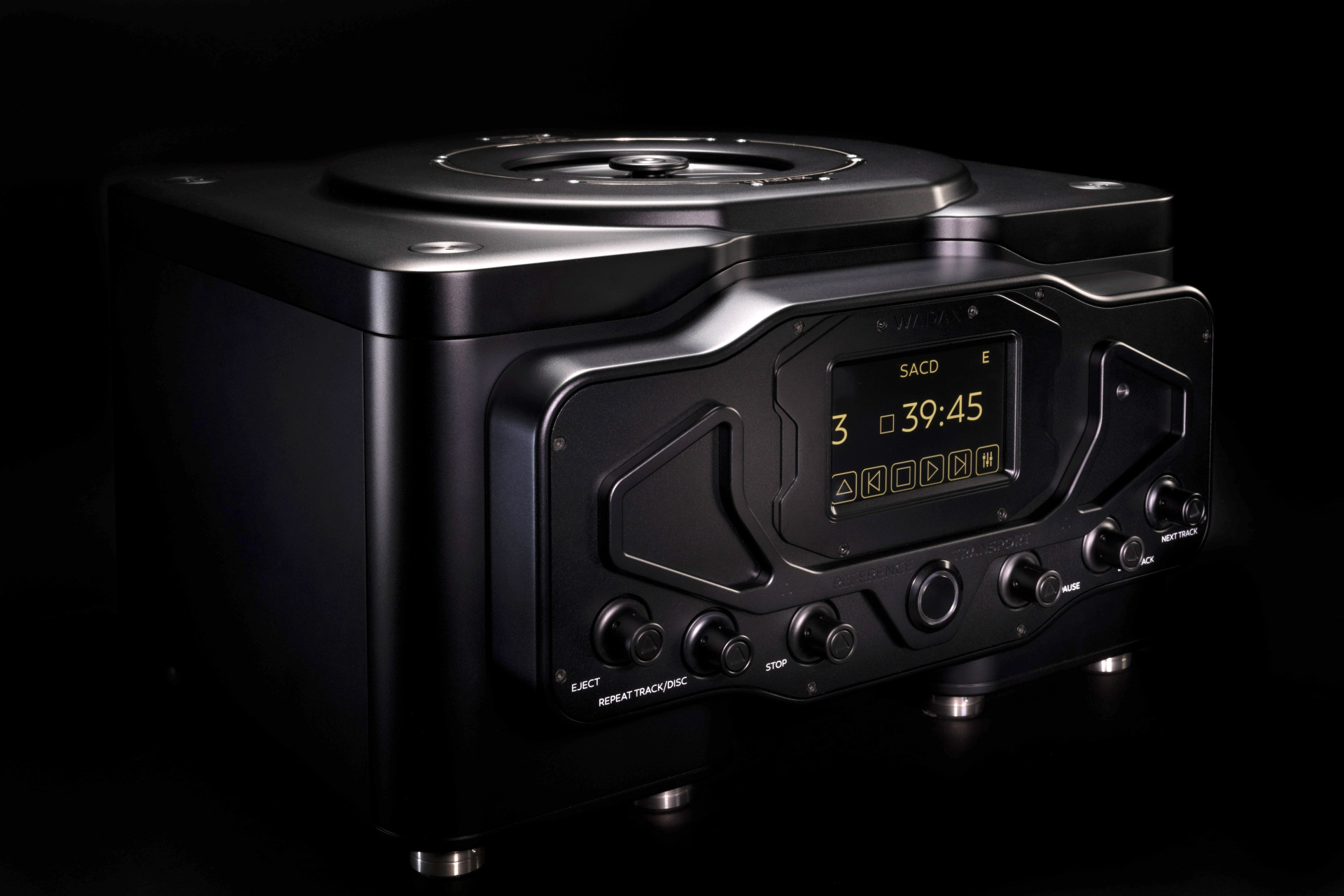
What brings this classic recording to life? It’s partly the silence behind the music and between the notes, but move in closer and it quickly becomes apparent that this is about more than just ‘blackness’. The utter stillness that sits around the instruments generates not only an absolute sense of stable location and dimensionality, but a tactile presence too. The plucked strings of the upright bass on ‘Cry Me A River’ have a vibrant signature and thickness to their tone, a vividly explicit attack and tail as they are plucked and released. As impressive as the Atlantis Transport is on Ólafsson’s Debussy-Rameau (DGG 483 7701) the Reference Transport is in a totally different league: the sense of note weight and attack, the action, scale and complexity of the piano, the placing and spacing of notes combine to create a vividly convincing sense of a real instrument in a real space – with real human agency at work. The sensitivity in the playing, the unhurried, reflective phrasing of the slower works, the glittering cascade of the faster passages has a crystalline clarity and purpose. This isn’t sterile or hyper defined: it’s the intent and direction in the playing that’s explicit, the reproduction so unhesitatingly fluid and tactile that the system allows you to see past the sound of the notes to the motion and motive that’s producing them. If the acid test of any source is how far it lets you see into the recording and performance, then it’s a test that the Reference Transport aces.
Even without the benefit of the external power supply, the flagship transport totally eclipses the performance of the Atlantis – and that’s no easy task. Whether you are playing small-scale audiophile fodder like girl and guitar, or more mainstream, more complex and demanding music, the Reference Transport creates a sense of solid presence and immediacy that underpins its ability to spark life in the recording and immediacy in the listening experience. It has a holistic presentation that is as comfortable with the expansive acoustic of golden age classical recordings as it is in welding together multi-micced pop or rock captured in the studio, live jazz or purist, minimalist ‘sonics uber alles’ acoustic tracks. It breathes life into singers, instills tension in strings and drum-skins, weight and complexity in pianos. It has an almost uncanny ability to vibrate air in the same way as instruments or voices do – and to do it with individual sound sources, bands or complete orchestras. With an unerring sense of perspective and proportion, it demonstrates emphatically how the latest generation of disc players can raise optical disc replay to previously unsuspected heights: and we haven’t finished yet!
Comparison Three – The Reference Server with Reference PSU.
The question that’s getting asked an awful lot is how the Reference Transport stacks up against the Reference Server. In one sense, that’s an easy question to answer: there’s no contest. However, that assumes that there’s only one way of assessing relative performance, only one question to answer. So, before moving onto specifics, I’ll set out exactly how the direct comparisons were done.