

Play Isabelle Faust’s Locatelli disc, il virtuoso, il poeta (Harmonia Mundi HMM 902398) on the Studio Player and it’s immediately apparent why so many listeners find this machine so impressive. The performance is delivered with real presence, purpose and energy. There’s a physicality and directed energy to the band’s playing, a poised agility in Faust’s solo passages, an obvious sense of structure and progressive symmetry in the music as a whole. But switch to the transport/DAC and there’s a yawning chasm between the two presentations. As impressive, entertaining and engaging as the Studio Player is, the Reference Transport delivers vastly more information and makes much more impressive musical use of it. The stage is wider and deeper, the perspective far more natural, the band arrayed in a defined space with side and rear walls as well as a floor. Within that space, Il Giardino Armonico’s individual instruments are defined in terms of location, scale, texture and tonality, with Faust, clearly standing in front of them.
So much for the sonic niceties, it’s once you start looking at the temporal and dynamic domains that the musical sophistication of the Reference components stamp their authority on proceedings. The formal structures of the baroque composition are solidly mapped in the explicit phrasing, the music becoming a series of interlinked, discrete but predictable sentences, against which the solo part cavorts. Faust’s playing takes on a fluid agility, poise and delicacy, her control of attack and bow pressure as clearly audible as the results are musically impressive. Her placement and spacing of notes is clearer and more effective, just as the band’s phrases are more contained and complete. But it’s the space between the notes and phrases that’s really telling.
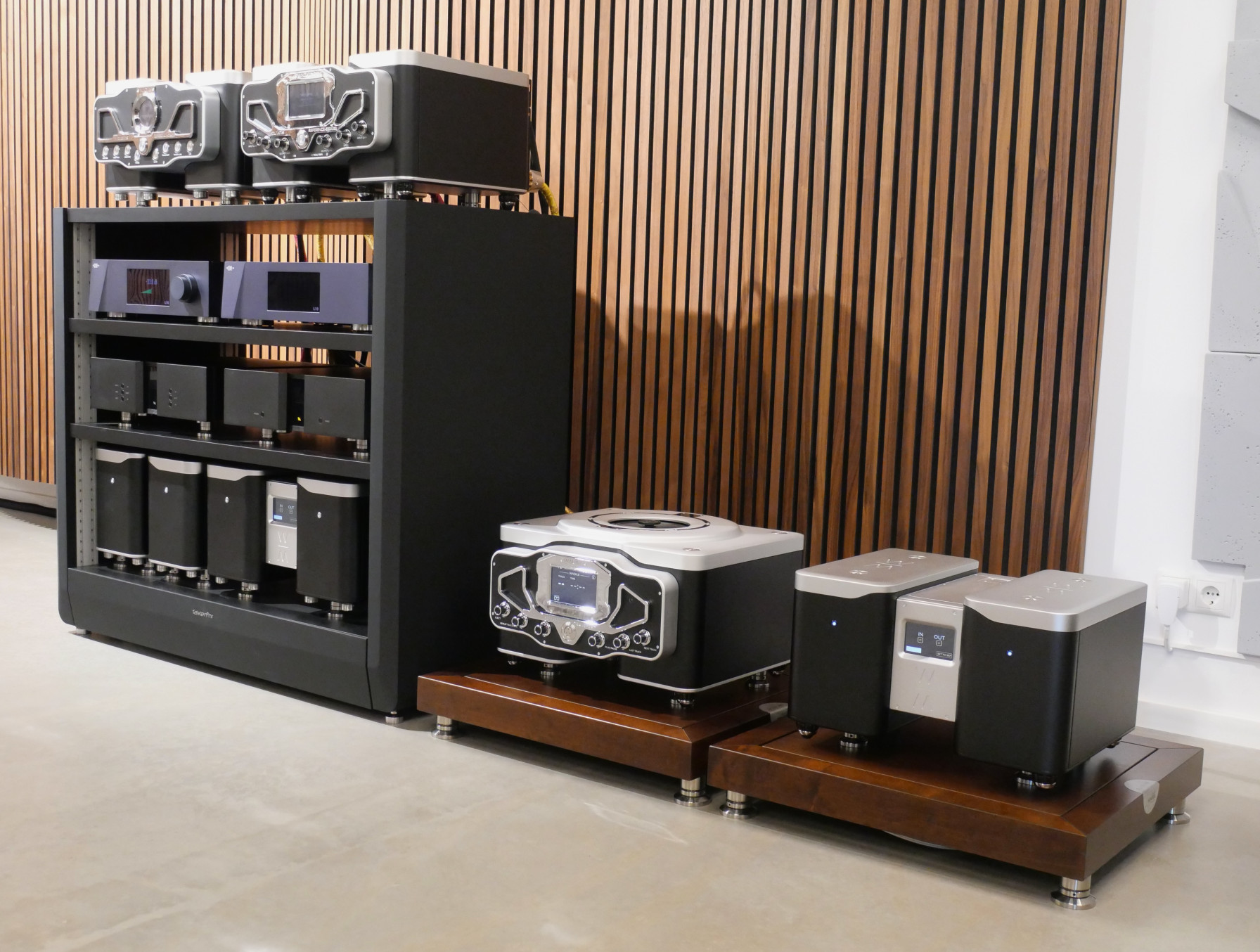
As part of this review process I was able to enjoy the Reference Transport/DAC combination in the context of Göbel’s impressive factory listening room and system https://gy8.eu/blog/majestic-by-name/. It really underlined the utter silence that exists behind the music when you play it on the Wadax Reference components. You quickly realise that other players leave a noise or texture in the background, no matter how ‘black’ it seems. The Reference DAC and Transport are characterised by a complete absence of any such leakage or pollution. It accounts for the emphatic rhythmic presentation, the impressive dynamic shading and the unwavering solidity to the images and musical picture. Above all, it accounts for the expressive range so apparent in the playing. Just listen to the deliberate, elongated pauses in the final, slow movement of the programmatic Op.7 No61 ‘Il Pianto d’Arianna’ (think a more romance-based Four Seasons). Those pauses are there on the Studio Player, but their sense and impact is diminished. They’re there, but why they’re there is less than obvious. On the Reference Transport the pauses are both more deliberate and more complete. It’s almost as if they last longer, the halts are so much more sudden, the duration almost uncomfortably drawn out. Rather than interrupting or distracting, they shape and bring meaning and emotional weight to the music. It might sound like a small detail, but it’s the difference between aural wallpaper and a far more affecting musical involvement and experience.