

 Fortunately, not only is the Music Room at Gy8 purpose built, including access, Göbel’s speaker packaging is considerably more thoughtful than most. In fact, it’s an object lesson in handling the unmanageable weight and size of modern, high-end products. It’s something I’ve mentioned before, but as the products increase in size (and weight), it’s also something that becomes increasingly relevant and important. With that in mind, let’s look at the steps necessary to deliver and install the Divin Monarques.
The first thing to note is that the speakers are packed in wheeled flight-cases. That’s definitely a step in the right direction, but it’s not a universal panacea to the issues of transport. Any wheel or caster is only as strong as the structure it’s attached to and they’re called flight-cases for a reason: maximum protection at minimum weight. Even though the cases for the Monarques are designed to support a 380kg product and themselves weigh in at another 100kg, there’s still a limit to just how substantial a mounting for the casters can be. Roll them gently on a flat surface and they’ll be fine. Take them cross-country? Not so much. Indeed, hitting even a one-inch step at speed could easily rip a caster free from its mountings – and then you’d be in a world of hurt.
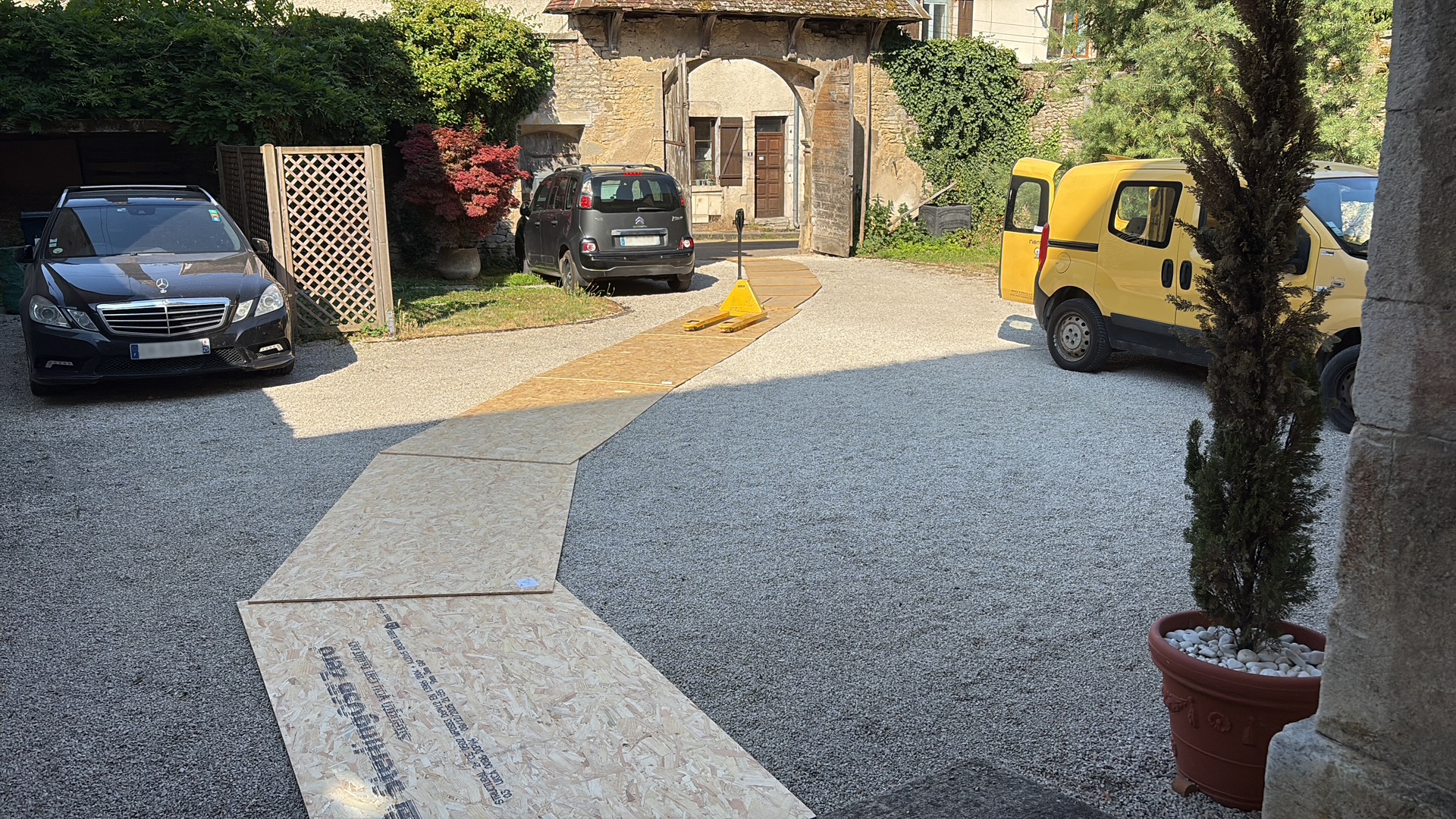
Access at Gy8 is as easy and smooth as we could make it, with ramps linking the different levels of the 17thC. structure and 1100cm/43” wide doorways. Even so, it’s not without its challenges. The speakers arrive in the road outside meaning they’ve got to traverse a dropped kerb before they even reach the property, while the front yard is gravelled, as per local/historical restrictions. The answer is to build a wood board pathway, that bridges the step up the kerb and the gravel in a single passage. You could take it by stages, rolling the flight-case forward before leapfrogging boards from behind it to in front, to allow gradual progress, but even though we’re talking a distance of around 30 meters it’s still easier to invest in (and handle) sufficient boards to build a single pathway.
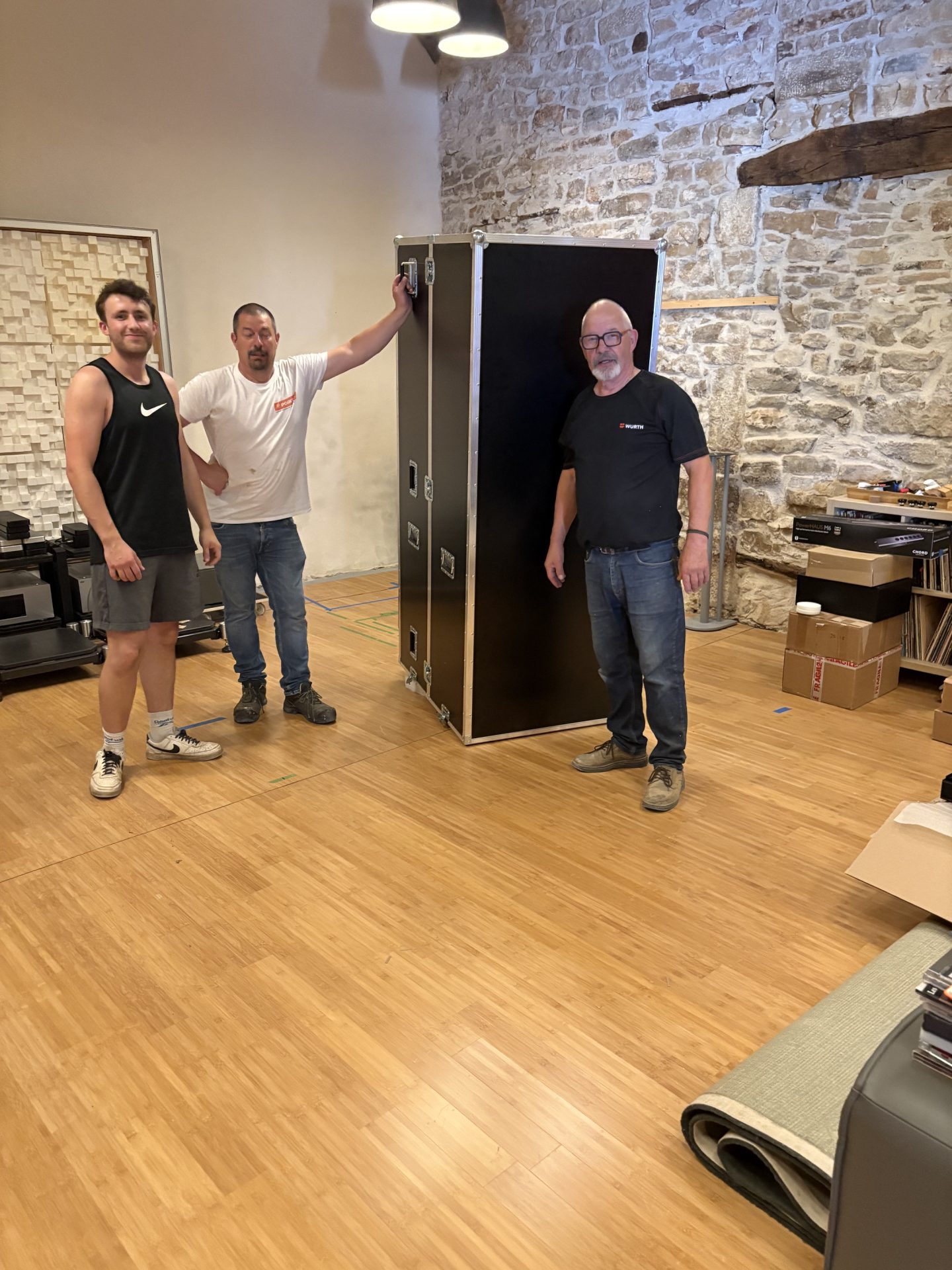
Even with the boards pre-laid, it still needs several people to move such heavy speakers carefully and safely – and that’s before having to get them vertical. That means extra bodies and, if they’re not going to be hanging around all day (in a heat-wave!) that means a timed delivery – another cost and complication to add to the growing list. Fortunately, the local VFD (or Supeurs Pompiers as they are more colourfully referred to around here) are ready, willing and able. Making transfer of the speaker cases from street to listening room considerably easier than it might have been.
When two becomes three…
Which brings us to the unpacking stage and the point where Göbel’s approach really comes into its own. Most flight-cases consist of two halves, clipped around the protected product. Göbel goes one small, but significant step further: their flight-cases have three sections – a top, a bottom and an end when they’re horizontal/rolling, but a base, a front and a back once they’re stood up/vertical. The brilliantly simple thing about this is that, having rolled the speaker into position, you simply remove the base and then lift the (still protected) cabinet upright, onto its own feet. Once vertical, the remaining halves of the flight case (now a front and a back) are just unclipped and removed. It’s a system that obviates the need to lift or walk the speaker out of its crate or packaging and which keeps it fully protected throughout the passage from delivery to placement. Add in the nylon sliders that slip over the Monarque’s large diameter feet and, once the speakers have shed their carapace, they’re astonishingly easy to move. It’s an object lesson in how to pack, present and handle a product that’s as heavy as it is fragile and it’s a lesson that every serious manufacturer of serious loudspeakers should take seriously.