

But in some ways, as impressive as the Monarques are on classical, jazz and other acoustic material, I find their impact in the studio even greater. Their ability to bring balance to a mix and sort out its layers, all without robbing of body, pace and impact can be little short of revelatory. It digs deep into recordings that are merely ordinary. It elevates the great and the familiar to new heights and the reason it does so, once again, lies in that remarkable temporal, spatial and dynamic coherence.
Recording an acoustic event is largely about capturing a single space as a coherent whole, which is why the fewer microphones you use the easier that becomes. Of course, questions of scale and inner balance argue for more mics, but the minimum necessary rule still holds true – helping explain why minimalist, early stereo recordings can achieve such musically convincing results (leaving aside the quality of the performers, at least for now).
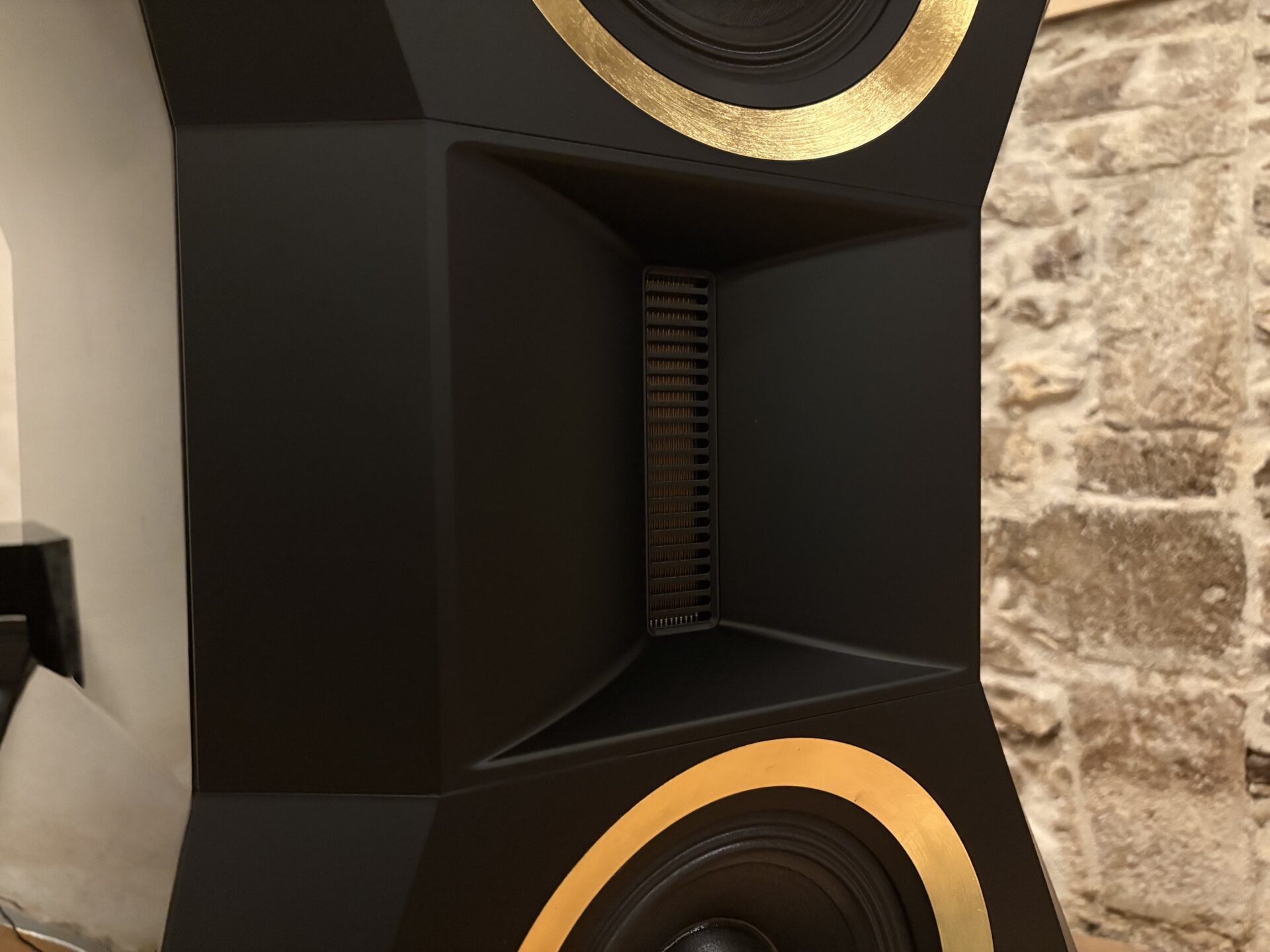
Working in the studio is, more often than not, the reverse process, trying to assemble a meaningful and spatially coherent whole from a kit of disparate parts, often recorded separately and at different times. These days, ‘star’ performers grafted onto a mix often simply ‘phone in’ their part, playing and recording it entirely remotely. If the classical engineer is intent on maintaining or improving musical balance, the pop producer has to construct tracks from scratch. It’s a bit like trying to sculpt the smooth, powerful shape and lines of a super car out of Lego or Meccano. It’s a goal that isn’t helped by a loudspeaker that disturbs the continuity, balance or pattern of the carefully assembled and massaged recording.
Time in the studio…
A really good studio recording can be surprisingly effective, fooling the listener into hearing a single, contiguous space, a one-take recording. You can cite anything from Jennifer Warnes’ The Hunter to Nanci Griffith’s Storms as stellar examples. Look no further than the track ‘Somewhere, Somebody’ to hear just how natural, intimate, communicative and convincing a studio creation can be.
Of course, working in the studio also creates opportunities. The synthetic nature of the soundscape allows producers to play with locational and spatial effects, to assemble a sonic, musical and spatial collage to enhance the music’s presentation and intent. Although there are many such examples, one of the most effective is the track ‘Real Bad News’ (from the Aimee Mann album, Lost in Space – MFSL UDSACD 2021). The cavernous soundstage is opened and established with a range of incidental noises, static, flanged keyboard snippets and field recordings. The Monarques allow the soundstage to swell, wider and deeper than the listening room, a vast, space against which Mann’s intimate vocal suddenly appears, front and centre, solid and present, that presence enhanced by the void behind it. As the track builds, it takes on a substantial, gently but irresistibly propulsive form, bringing shape and direction to what started out aimless and indistinct, added weight, emotional depth and sense to a deceptively simple message. That initial, indistinct, hard to grasp space, so effectively rendered by the Monarques is key to the bait and switch juxtaposition so key to the lyric, a contrast that simply makes the song make more sense.