

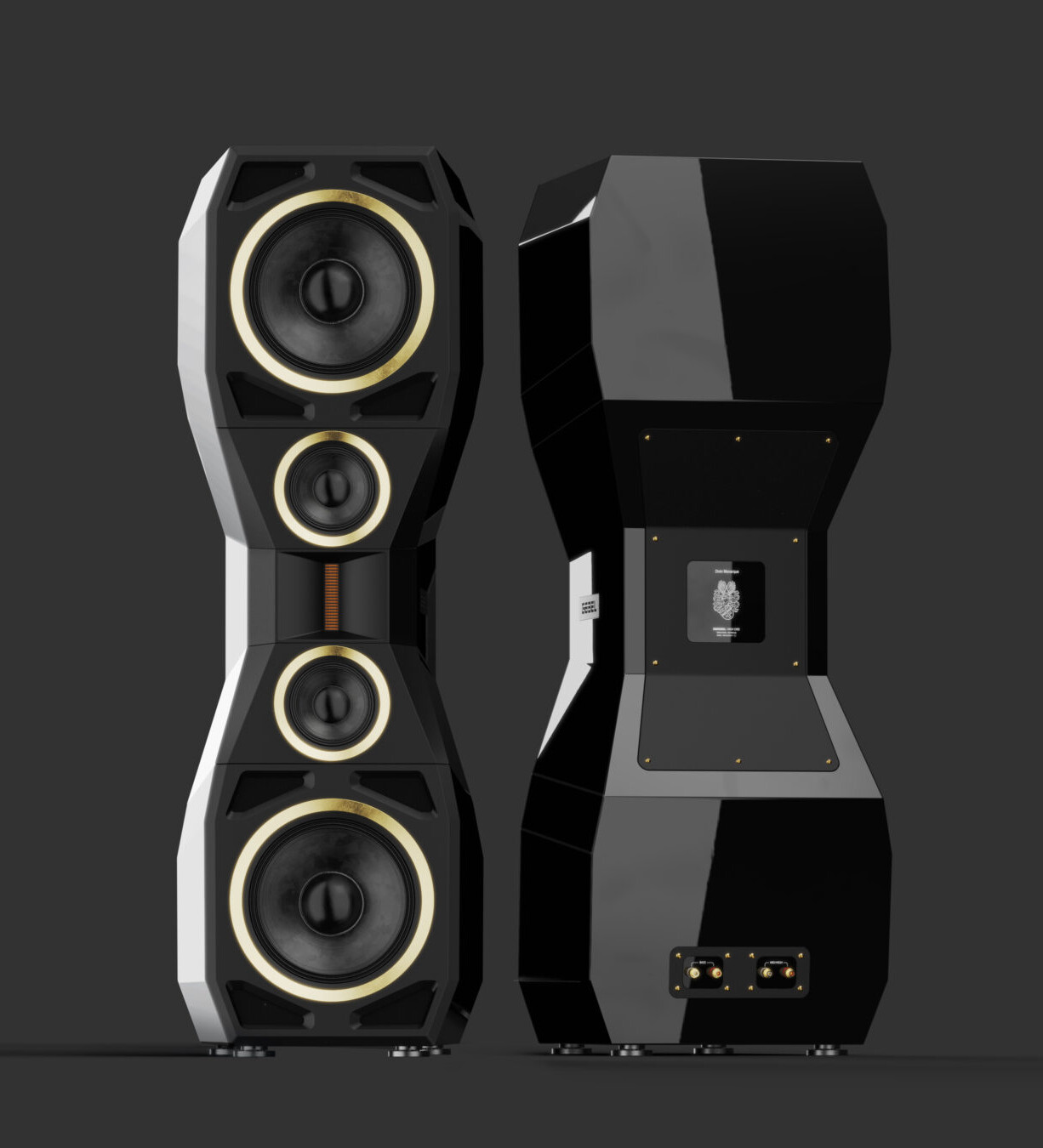
More importantly, by affording the temporal, spatial and dynamic domains equal priority, the Monarque is able to present natural scale, perspective and proportions, dimensionally and musically. Rather than the stereo image being an end in itself, it’s simply a natural adjunct of things being the right size and in the right place at the right time. It’s all about that obsessive approach to cabinet design and the controlled dispersion of energy within the structure and the enclosed air-mass, eliminating resonant peaks and stored energy that disturb, exaggerate or blur the speaker’s output. The musical content, pattern and energy in the signal are preserved intact and in proportion, reproduced with a natural sense and flow that is as unimpeded as it is expressive. It offers the opportunity to make the speaker and the system driving it essentially invisible, at least in musical terms – even if, physically, the Monarques are hard to ignore.
How does this impact musical reproduction and presentation? Given the ‘dimensions’ in question, the place to start is with an acoustic recording of piano. It’s an obvious choice, given the instrument’s bandwidth, complexity, potential power and percussive nature – with the emphasis that places on the placement and spacing of notes. One recording that has graced every system that’s played in the Music Room in the last five-years is Víkingur Ólafsson’s Debussy-Rameau (DGG 4837701) and it has become its own benchmark, not so much for the quality of the recording – which is excellent by modern mainstream classical standards – but for the quality of the performance. Playing it on this speaker, on this system, the fluidity and pacing are as natural as they are unforced. Whether it’s the cascade of notes from Rameau, or the studied, reflective space of Debussy, the speaker puts the music firmly first, grasping and holding the attention, anchoring it on a solid, dimensional and beautifully scaled instrument, redolent with harmonic and mechanical complexity.
A place for everything.
The musical connection and articulation of left and right hands is uncannily human. So often presented as almost separate entities on separate instruments, it’s one of the things I look for first with this recording and during set-up. Here, the continuity across the keyboard is utterly contiguous, the expressive quality across the two hands a single extension of a singular emotional and musical vision. That holistic, expressive range is a key quality in successfully reproducing this recording and performance, in all its aspects. I’m used to it being good – just not this good. The ability to capture the relative position and power, the energy and harmonic structure of a note with equal clarity and accuracy, irrespective of frequency, elevates the presentation to a level that I’ve only heard rivalled by the active Avantgarde Trio G3, with its sudden response to dynamic demands able to accurately mirror the action of the instrument, the weight and attack of each note. The Monarque can’t match that degree of immediacy, explicit separation and dynamic discrimination, but it comes awfully close, with a slightly more distant perspective that captures the second half of notes, the layers and duration of their tails, more naturally. The instrument sounds bigger, richer and more planted as a result, with a more developed and encompassing acoustic. With the Trio, Ólafsson and his instrument are here. With the Monarque, you are there. It’s an important presentational distinction and one that contributes directly to the Monarque’s ability as an all-round musical performer.